

There is a particular kind of man who looks at a smoldering ruin and sees, before the smoke has cleared, a development opportunity. History tends to reward him handsomely for this and then name a building after him.

Larry Silverstein is that man. So is Howard Lutnick. And so, in his own way, is Jared Kushner. These men did not arrive in the same rooms by accident. Understanding how they got there requires understanding what September 11 made the first two, what the Abraham Accords made the third, and what Donald Trump made possible for all of them.
Rubble Made Men

On July 24, 2001, Silverstein Properties signed a 99-year lease on the entire World Trade Center complex for $3.2 billion, the largest real estate transaction in New York City history at the time. Seven weeks later, the buildings were gone.
Cantor Fitzgerald, the bond trading firm whose 658 New York employees died in the North Tower that morning, occupied floors 101 through 105, directly above where the first plane struck. Howard Lutnick, then CEO of Cantor Fitzgerald, had stepped out to walk his son to his first day of kindergarten. He survived. His brother Gary did not.

What followed, for these men, was a two-decade exercise in rebuilding from catastrophic loss, and a shared rhetorical framework in which patience, institutional capital, and political access are presented as the natural response to ruins. Lutnick made this framework explicit. Speaking at a United Hatzalah gala following October 7, he told the room:
“None of my people got out. Israel will rebuild. And it will be stronger. In 15 years, Israel will be the shining star of the world.”
The man who spent twenty years watching a Manhattan skyline reassemble itself was now projecting that same timeline, and that same return on patient capital, onto a country whose skyline had just been substantially rearranged. Purely sentimental, of course.

That sentiment translated into action. After October 7, Lutnick raised $75 million for Trump’s campaign and co-chaired the presidential transition, meaning he had a significant hand in selecting the cabinet he now sits in. In February 2025, he became U.S. Secretary of Commerce, the position responsible for trade frameworks and investment architecture. At his Senate confirmation hearing, when asked about the Abraham Accords, he expressed full commitment to expanding them, describing their “vast economic potential.” Which is one way to describe it.

Let’s be real about the sequence: Lutnick spent $75 million to put Trump in the White House, co-designed the incoming administration, installed himself as Commerce Secretary, and now oversees the trade architecture governing a normalized Middle East, the same economic normalization project he had declared his commitment to before Trump was even inaugurated. He did not end up in that room by accident- he rigged the game and purchased the door.
And he did not arrive empty-handed. The Cantor Fitzgerald and Silverstein Properties Opportunity Zone fund, a vehicle designed to channel private capital into designated redevelopment areas at scale in exchange for substantial tax advantages, closed in March 2025 at more than $470 million raised.
“Opportunity Zone Fund.” That’s what they called it.
Nothing unusual about a $470 million reconstruction-oriented fund, co-managed by the man who rebuilt Ground Zero and the man who compared Israel’s rebuilding to his own, closing just as the reconstruction opportunity of a generation was taking shape. The man who co-manages that fund is now the U.S. Secretary of Commerce. The conflict of interest is structural, and it has barely been treated as one- because so what? Who cares?

If Silverstein is the mythology and Lutnick is the policy lever, Tal Kerret is the architecture. Born in Bat Yam, educated at Tel Aviv University, six years as an IDF officer before founding two tech companies in New York and marrying into the Silverstein family — he is, in the most literal organizational sense, the human bridge between the Israeli military establishment, the Tel Aviv capital markets, and the New York real estate machine at the centre of this story. He did not marry into a role as much as he built one, and the building was deliberate.


He was also a speaker at the UAE Family Office and High Net Worth Annual Conference in Abu Dhabi in October 2026, held on Saadiyat Island (wasn’t there an Iranian missile strike there?) , a few kilometres from the headquarters of ADIA, the world’s largest sovereign wealth fund. The room, as they say, books itself.

The Infrastructure Already in Place
Before getting to how these men arrived in the same rooms now shaping the future of the Middle East, it is worth pausing over what Silverstein Properties had already built inside Israel, and what Israel had already built inside the United States.


The relationship is substantial, deeply financialized, and barely discussed outside the Israeli business press, probably because the details are both inconvenient and boring.

Silverstein Properties Limited is a bond-issuing entity listed on the Tel Aviv Stock Exchange that has raised close to $190 million across multiple issuances, with Israeli retail investors and major institutional funds holding paper backed by New York assets.


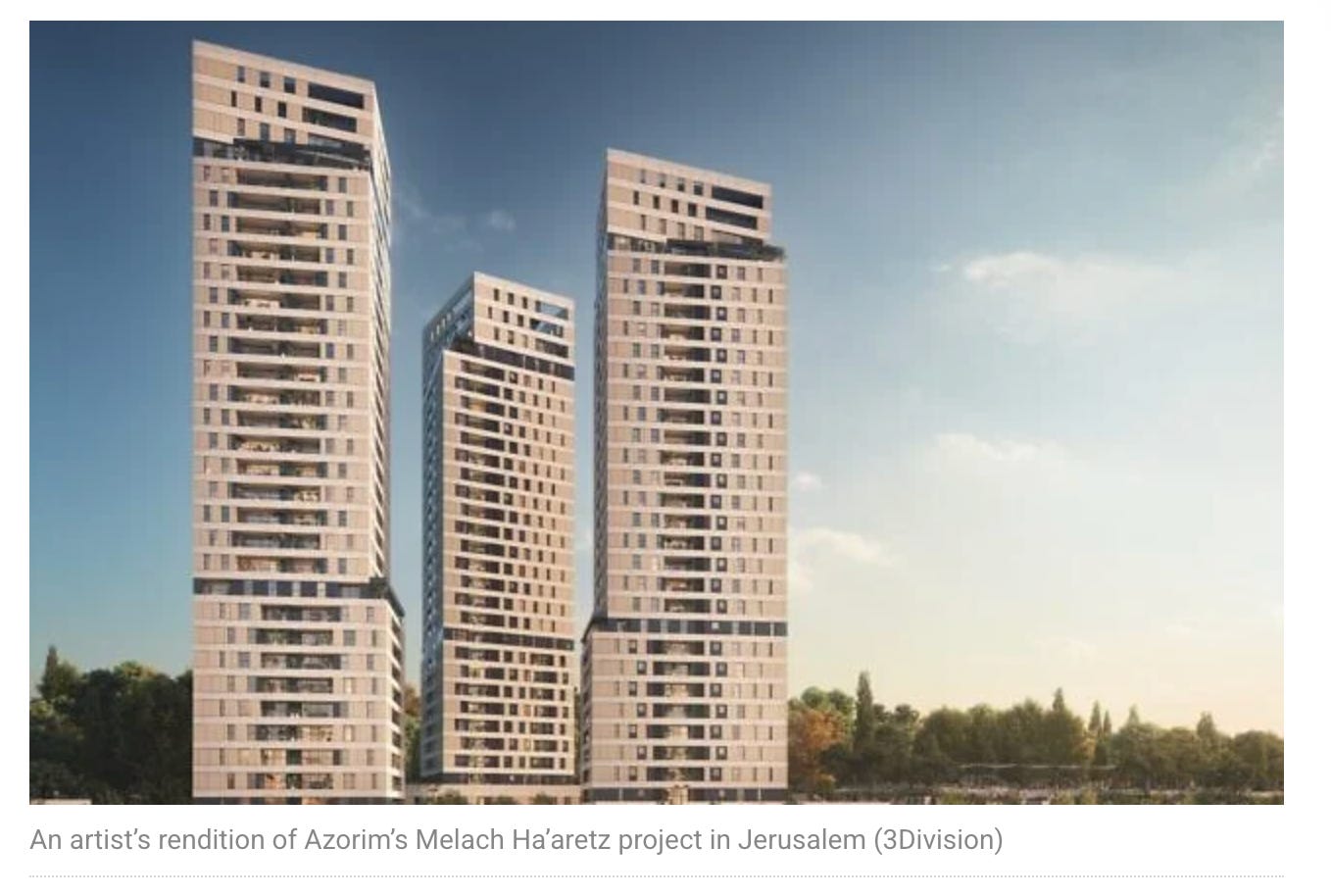
Running the Israeli operation is Lior Mor, whose career is a microcosm of the network. He came from Menora Mivtachim, where he ran the real estate division of one of Israel’s largest insurance companies. He raised over $500 million on the TASE for Silverstein. He then co-founded his own real estate investment firm, Goldstar Equities, while retaining his board seat at Azorim — one of Israel’s largest developers, now actively participating in the post-strike reconstruction pipeline. At every stage of his career, Mor has sat precisely at the intersection of Israeli institutional capital, real estate development, and the financial infrastructure that determines who builds what, where, and after what.
And just like that, the groundwork for channelling Israeli institutional money into post-crisis redevelopment vehicles was laid long before anyone fired a magic missile or signed a “low-interest” mortgage they were never meant to survive.
Probably just good planning
The kind of planning built over years of cultivated access, gala fundraisers, donor networks, private briefings, curated missions, and the quiet dinner-table introductions where these things actually happen.
Which brings us to the FIDF.
The FIDF: An Access Network, Not a Charity
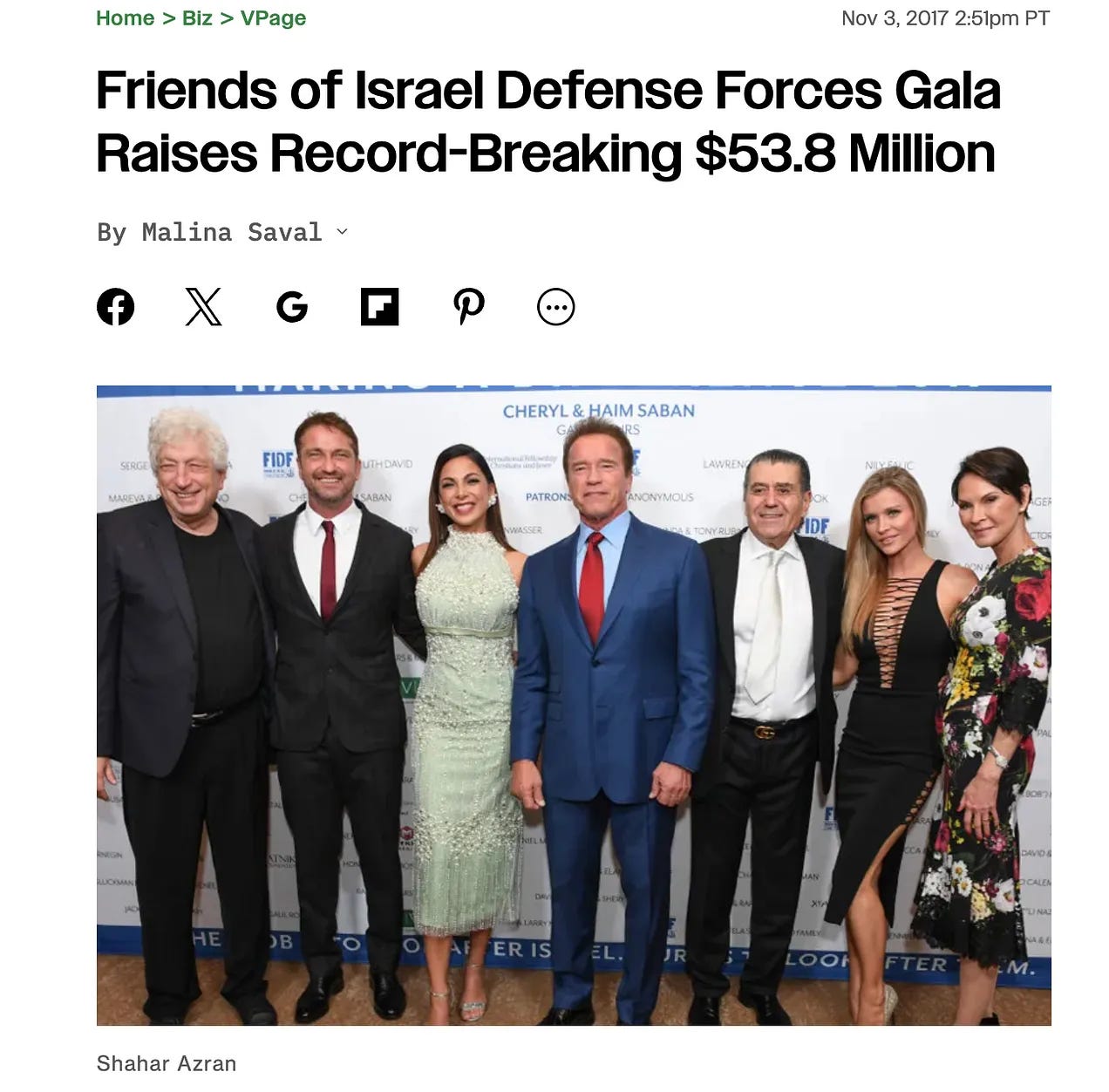
The FIDF presents itself as a humanitarian organization: a 501(c)(3) nonprofit dedicated to the health, well-being, and education of Israel’s soldiers. Its financial statements say it was incorporated in New York on December 15, 1981, and began operations on April 1, 1983. Its website describes it as the official American fundraising arm for IDF soldiers.

All very wholesome and bake-saley.

Very, “please think only about scholarships.”
Ugh.
The programs and scholarships are real. Lone soldier apartments are furnished, and mental health services are funded. The socks, one assumes, are folded with great care.
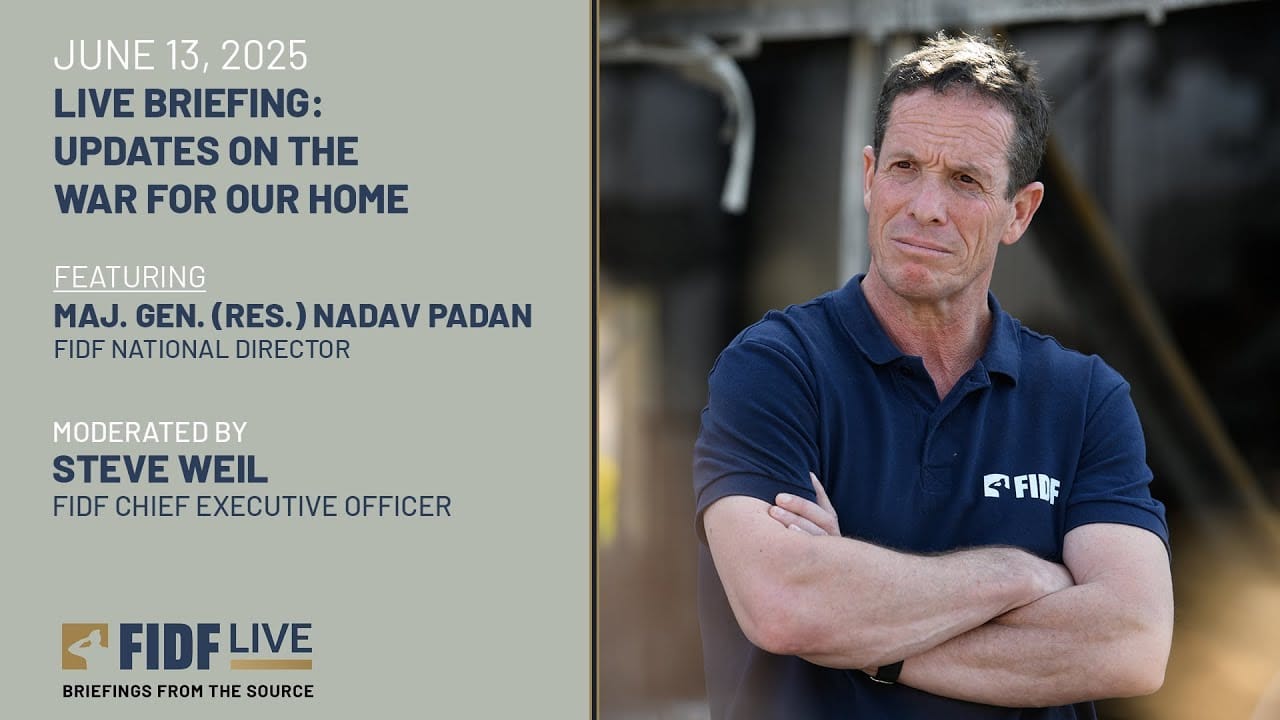
This is an organization built as a bridge between American money and Israeli military power. Today it is led by Maj. Gen. (Res.) Nadav Padan as CEO and National Director, with Fred Distenfeld as Chairperson and Dr. Nily Falic as Chairperson Emeritus. Around them sits a board filled with financiers, executives, developers, donors, and institutional and military operators.

Do you really believe that one of the most lavishly funded militaries on earth, backed by billions in U.S. assistance and a massive domestic defence budget, somehow still requires rescue-by-billionaire, corporate matching programs, and gala-room generosity from the upper floors of American capital?

There was even a time when the Kushner real estate group’s name flashed on those gala screens while Jared Kushner sat on the FIDF board of directors.
Until it was scrubbed.
The donor list reads like a directory of American institutional power and status: Bernie Marcus, Larry Ellison, Jan Koum, Haim Saban, Cheryl Saban, Sheldon and Miriam Adelson, Paul Singer, Michael Dell, Jared Kushner’s family foundations, the Kushner Real Estate Group, Silverstein Properties, and corporate matching pipelines tied to BlackRock, Vanguard, Bank of America, Northrop Grumman, Honeywell, Google, Microsoft, Apple, Starbucks, and McDonald’s.

A whole ruling class suddenly overcome with concern for the emotional well-being of nineteen-year-old conscripts?
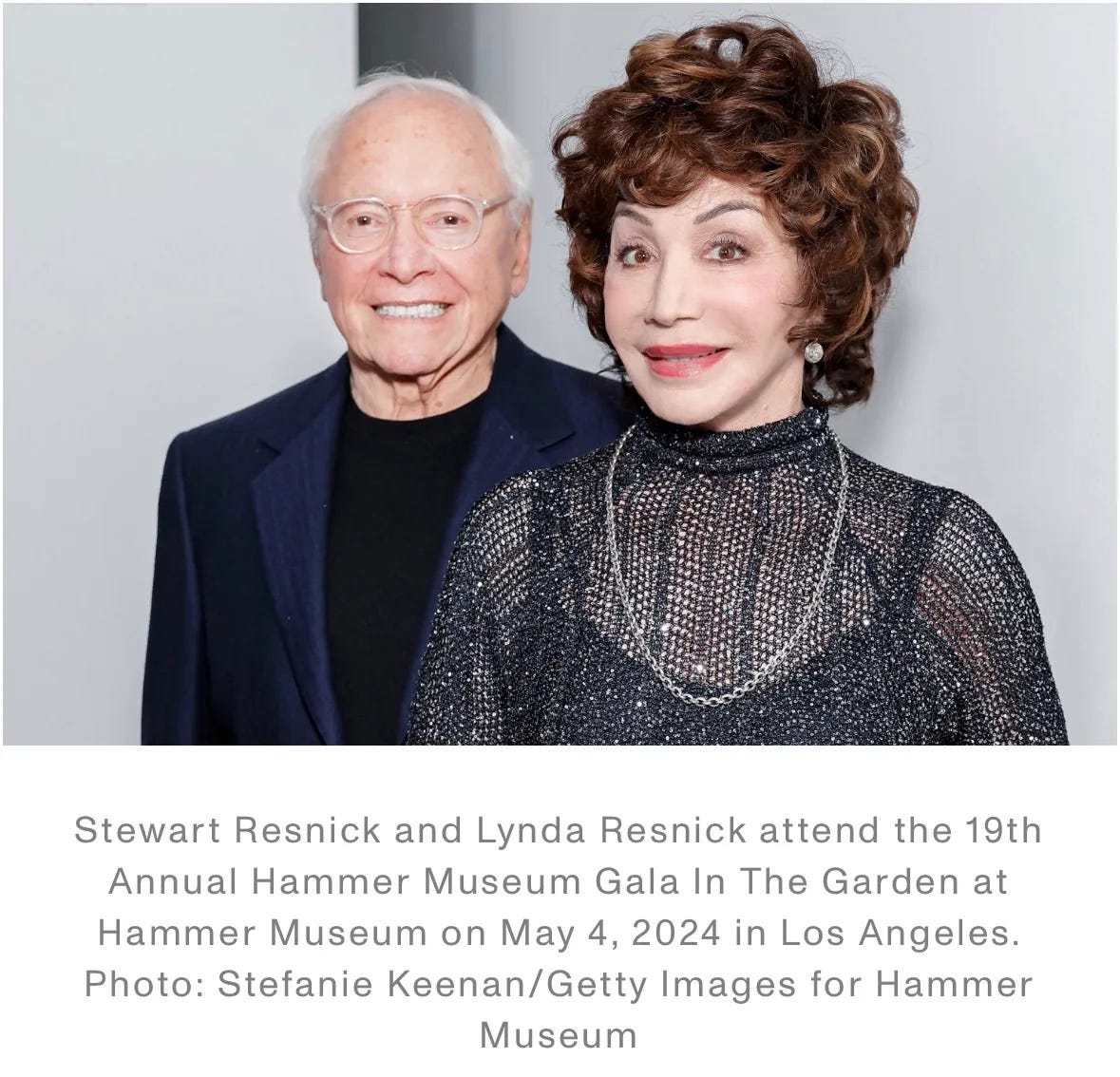
Does it make sense that the Resnicks — California’s pistachio billionaires — gave $2.4M to Friends of the IDF, and Iranian pistachio facilities just happened to land in the blast radius?
Because that would be a normal military target, right?
Or is it more likely that donations buy access to the institutions that shape security, land, infrastructure, trade, and reconstruction?
Influence moves through preference, alignment, and early access. Some projects advance faster. Some obstacles fall away. Some people are already in the room when the contracts are written.
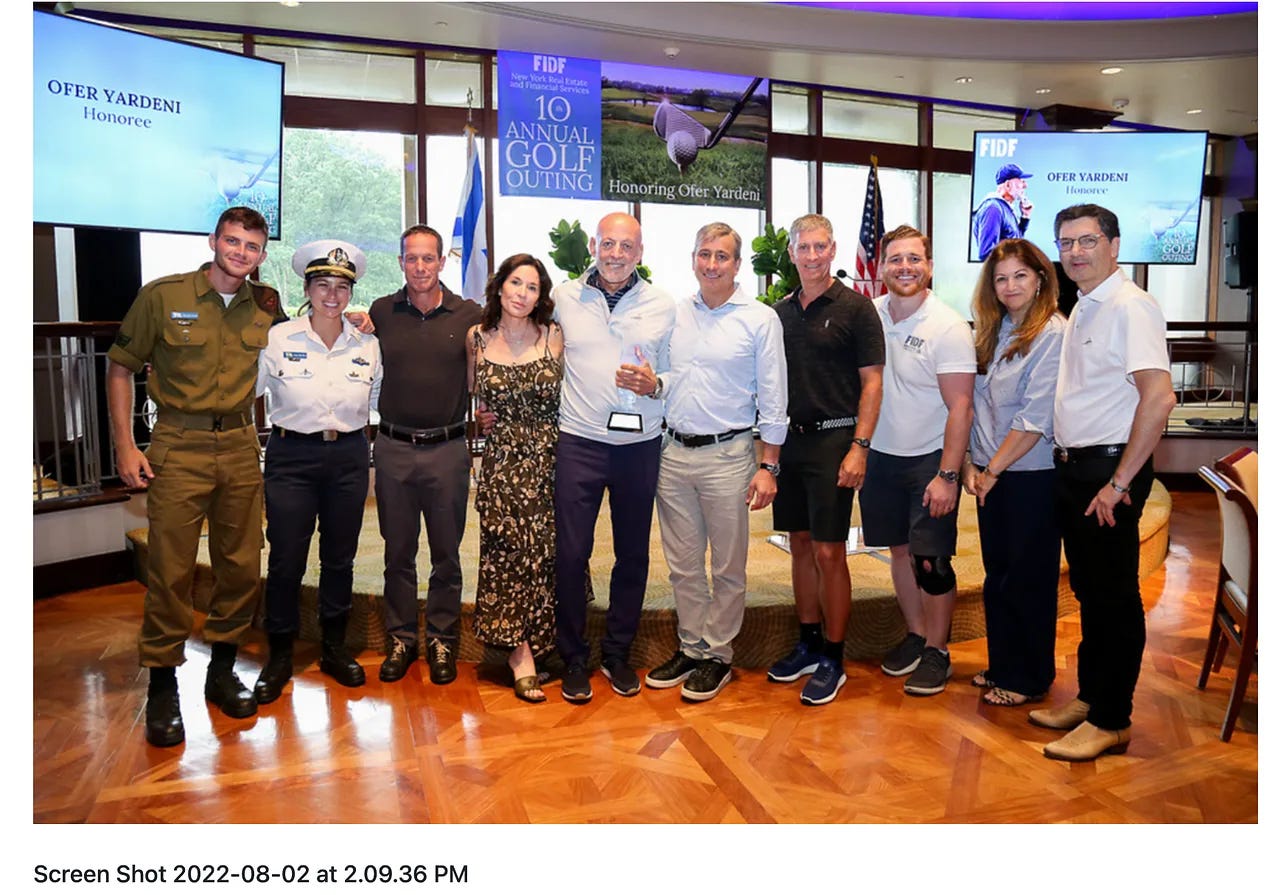
No one is there because they are worried about soldiers in Beersheba. They are in the room because the general is in the room, and the general is where the access is. The cringe, soldier-welfare language is the ticket and the tax deduction keeps it neat. The value is proximity: FIDF donor status places you inside the rooms of douche canoes where generals, military operators, financiers, developers, insurers, ministers, and people with maps tend to overlap.

Speaking of douche canoes, on one FIDF Real Estate Mission to Israel, seventeen New York developers toured IDF bases, visited a Navy base, watched F-15s take off, and toured active military sites on the Golan Heights. Marty Burger, former CEO of Silverstein Properties, described the original trip as “searching for financial connections” and later became co-chair of the Real Estate Mission.
As one does, when one simply wants to help the troops.
It is also worth noting that the FIDF is currently a governance mess. In mid-2025, an 18-page internal investigative report was leaked to the Israeli outlet Ynet, alleging financial mismanagement, cronyism, luxury expense abuse, and the double-selling of donor-named projects, including amphitheatres and memorials, to multiple contributors simultaneously. Sexual harassment complaints were reportedly mishandled or ignored.


Both the board chair and CEO resigned under pressure. Donations collapsed, with one Bay Area chapter seeing contributions fall from over $7 million annually to well under $1 million. The IDF itself declined to confirm the FIDF’s claim to be the sole authorized U.S. fundraising body for its soldiers, a claim that underpinned approximately $1 billion in fundraising since 2017. Tremendous governance all around.
The Simple Version
Here is what all of this means, stated plainly.
The same people who funded the Israeli military through the FIDF are now profiting from the reconstruction of buildings that military operations cleared. Many of them are former military officers themselves. The developers building on struck land had pre-existing plans to build there before a single “Iranian missile” fell. The insurance companies financing the reconstruction are the same institutions that funded Silverstein’s Israeli bond raises for years.
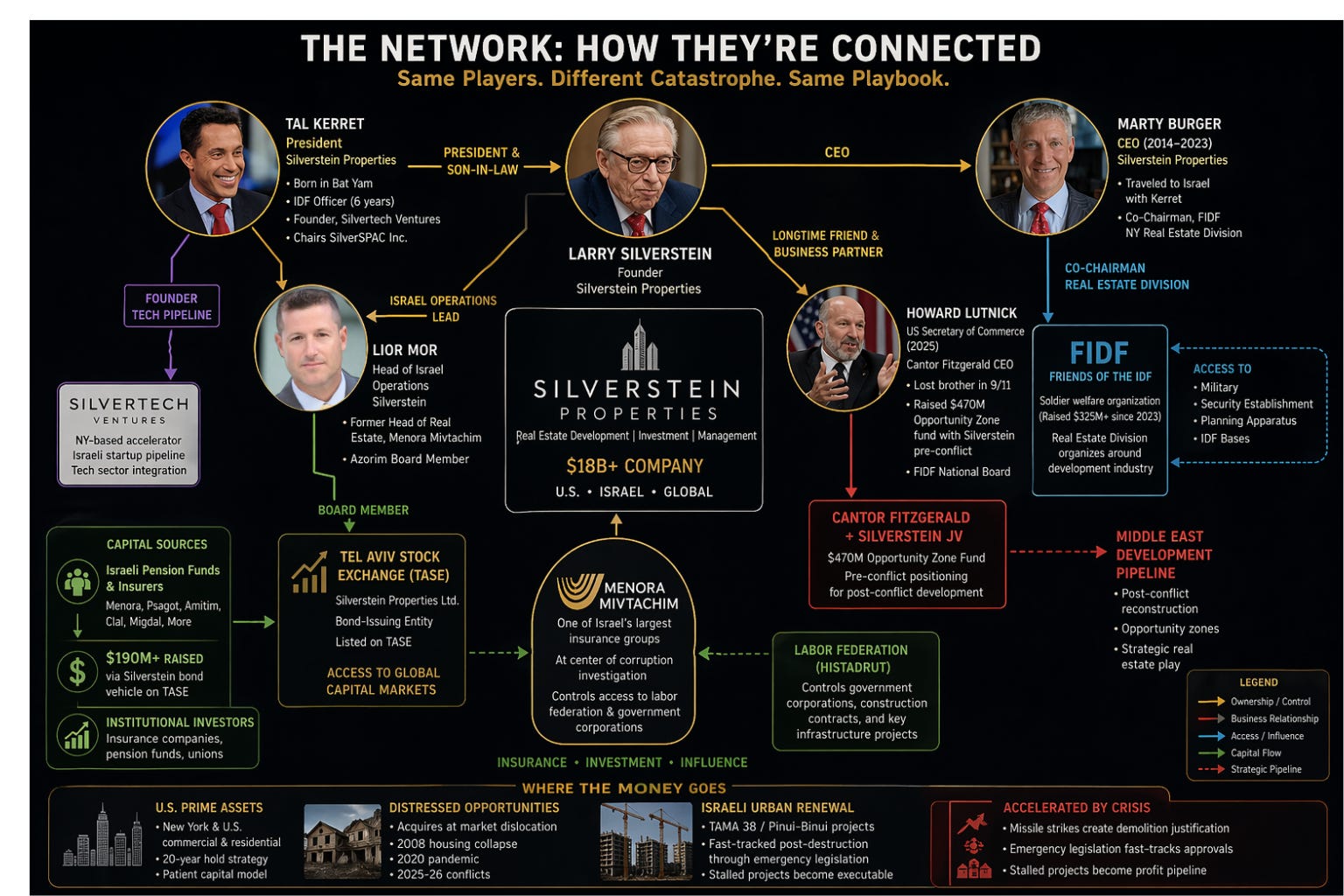
The man running Silverstein’s Israel operation previously worked at one of those insurance companies and now sits on the board of one of those developers. The man who brokered the normalization deal that unlocks Gulf capital for all of this sat on the FIDF board. The man now controlling U.S. trade and investment policy spent $75 million to get there and co-manages a $470 million reconstruction-oriented fund with the developer whose son-in-law is pitching Gulf sovereign wealth funds in Abu Dhabi.
The Menora Circle: How Gulf Money Flows Back to the Developers
The insurance company at the centre of all this is Menora Mivtachim, the same institution where Lior Mor ran the real estate division before joining Silverstein, and the same institution whose capital relationship with Silverstein helped build the Israeli bond program described above.
It is not a clean institution. On January 1, 2026, investigators from Israel’s Lahav 433 anti-corruption unit, the elite squad that handles major financial crime, raided Menora’s offices and questioned three of its most senior executives: CEO Ari Kalman, Chairman of the Board Yehuda Ben Assayag, and VP Orit Kramer. All three were released under restrictive conditions.
The investigation, dubbed “Hand Shaking Hand,” centers on the Histadrut labour federation corruption scandal, with Menora suspected of bribery and providing unlawful incentives to an insurance agent at the center of the case. More than 370 testimonies have been taken, 70 suspects questioned, and thousands of documents seized. Indictments are expected. This is the institution now positioned at the center of the post-conflict reconstruction capital flow.

Here is how the circle works. During the period when Kushner was constructing the Abraham Accords normalization framework, designed to unlock Gulf sovereign wealth for Israeli economic integration, Menora Mivtachim pumped $30 million into Kushner-owned Maryland apartment complexes. Menora was financing Kushner personally while Kushner was building the diplomatic architecture that would eventually benefit Menora institutionally.
That same Menora is now deploying 200 million shekels into Israeli urban renewal projects accelerated by the strikes. And Kushner’s Affinity Partners fund, backed by $2 billion from Saudi Arabia’s sovereign wealth fund and a further $1.5 billion from the UAE and Qatar, is now working toward becoming Menora’s largest shareholder.
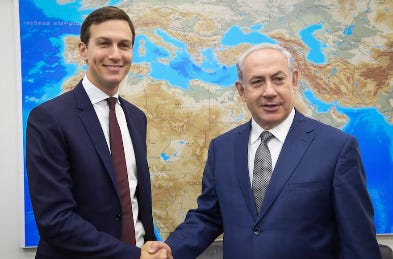
Read that sequence again. Menora finances Kushner’s U.S. real estate holdings. Kushner builds the normalization framework that brings Gulf money in from the cold. Kushner raises billions from Gulf states whose sovereign access his Accords helped enable. That Gulf capital flows back into Menora, the Israeli insurance company now under active criminal investigation, now financing the developers rebuilding the struck neighbourhoods and now on the verge of being majority-owned by the man who designed the diplomatic architecture that made all of it possible. The circle is a business model.
The Ground Already Cleared Before the Missiles


The struck areas in northern and central Israel had pre-existing urban renewal designations under TAMA 38 and Pinui-Binui, Israeli programs designed to facilitate demolition and redevelopment of structurally compromised older buildings, with lowered consent thresholds and fast-tracked planning approval. The pattern of what was hit and what was left standing has proven, on closer examination, more consistent with a clearance schedule than with the targeting logic of an adversary acting on military necessity.


In Ramat Gan’s Tirzah-Yerushalayim Boulevard compound, developer Canaan was already promoting renewal plans across seven buildings before the strikes. Carasso Real Estate and the Shaked Group were jointly advancing an evacuation-and-reconstruction project in the southern section. The buildings destroyed are Tirzah 12, Tirzah 14, and Yerushalayim Blvd. 75 were inside active renewal zones.
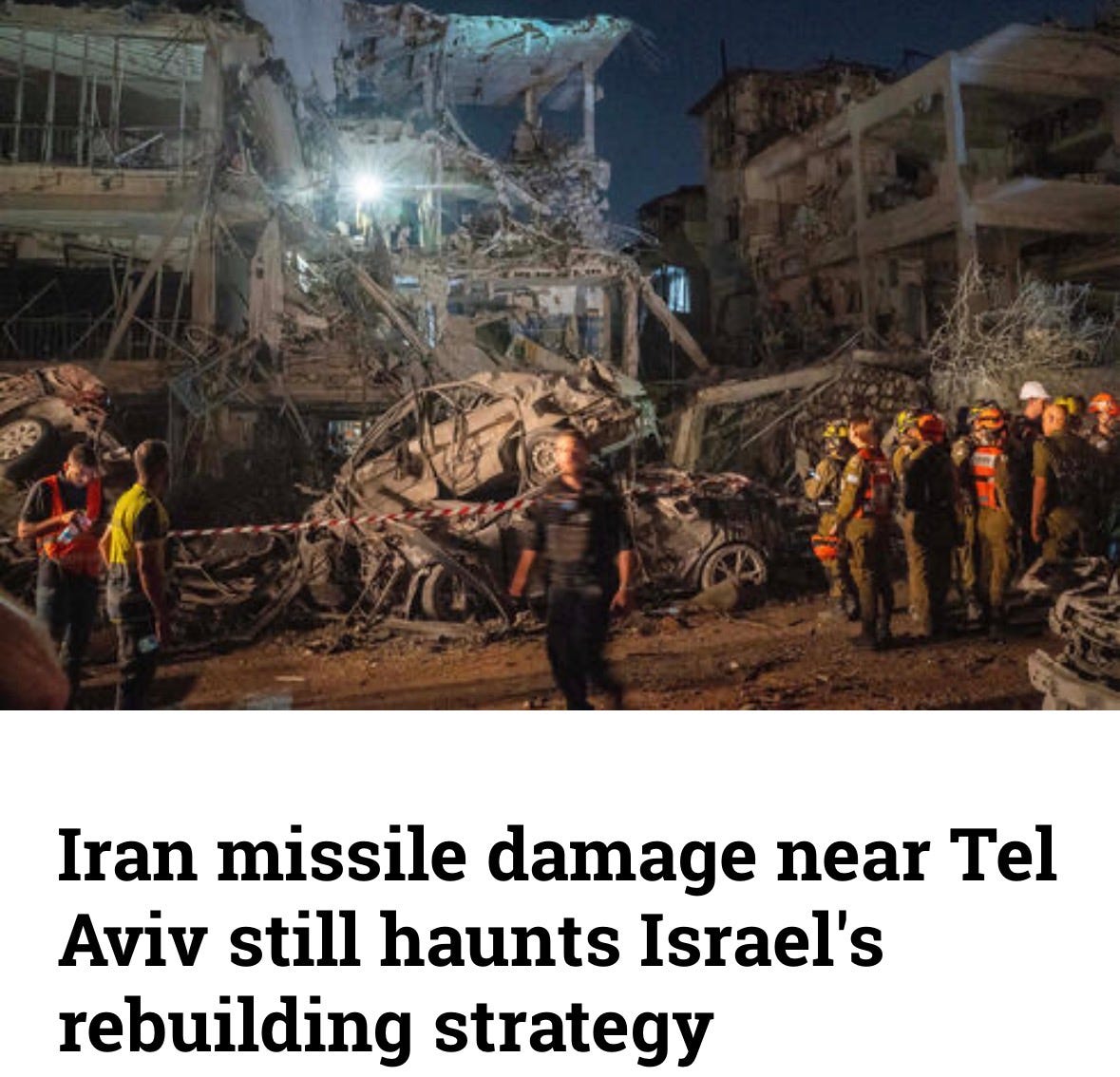
Baruch Shaked, one of those developers, is a retired IDF Lieutenant Colonel who served in construction and logistics units at Home Front Command. After the strike, the municipality moved immediately to advance full replacement rather than repair, coordinating with developer Tidhar to demolish 11 buildings and construct a 60-story tower on an accelerated planning track. Tidhar was co-founded by Gil Geva after he served as Operations Officer of Sayeret Matkal, the IDF’s most elite special reconnaissance unit. Seems normal.
The military, the donors, and the developers are the same ecosystem, cycling through different job titles.
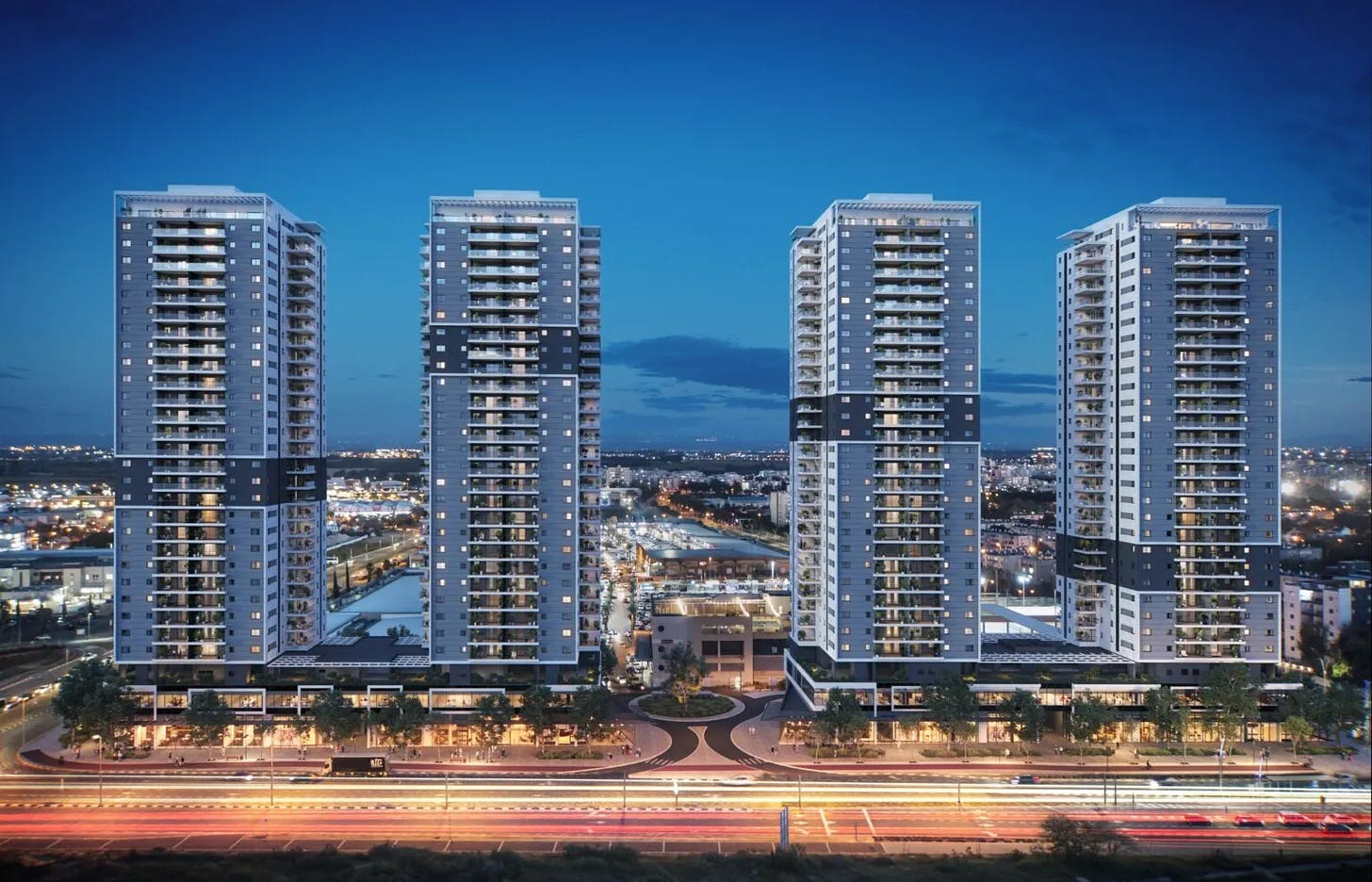
In Bat Yam, the city where Tal Kerret was born, a ballistic missile attributed to Iran allegedly killed nine people, including two children, on June 15, 2025, destroying or damaging 80 buildings while 800 displaced families were bused to hotels. What the official coverage did not lead with is that Bat Yam had already been identified, before a single missile fell, as one of the most compelling urban renewal markets in central Israel. The missile did not create the opportunity. It accelerated a clearance process that the planning system had already mapped.


Then there is the Kirya, the IDF’s own headquarters in the heart of Tel Aviv, already designated for partial private development before the conflict began. It was struck by a missile attributed to Iran on June 13, 2025, and struck again on April 4, 2026
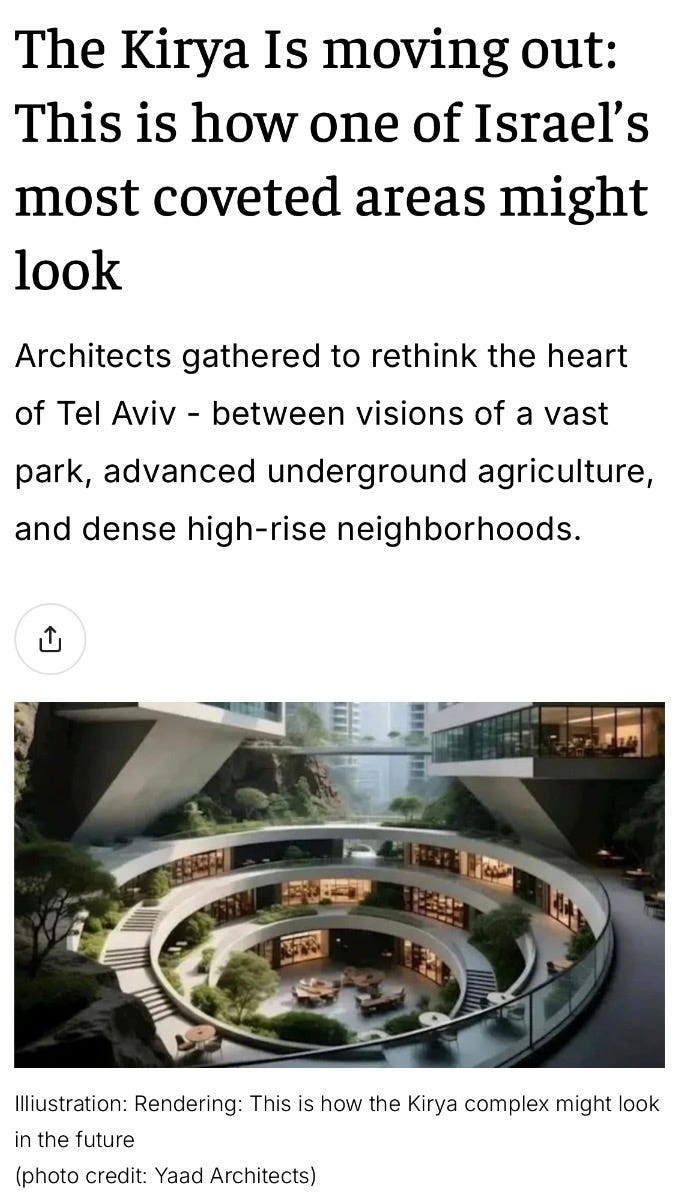
Simultaneously, the IDF is relocating 11 bases from central Israel to the Negev, freeing prime urban land across the country’s most expensive real estate corridor. The replacement military intelligence campus is being built by Shikun & Binui, one of Israel’s largest real estate firms.
The military vacates. The developers move in. The missiles, attributed to Iran, helpfully accelerated the timeline.
Remember how much hype there was around those buildings being struck?
Does it make more sense now?
Inflating Iranian capacity serves a very specific purpose. It turns damaged real estate into a national security event. It gives the public a villain, gives the state emergency justification, gives insurers a framework, gives developers a cleared path, and gives the ultra-rich another reconstruction cycle to monetize.
Old buildings, contested parcels, stalled urban renewal, insurance claims, emergency powers, defence budgets, and market surges all get wrapped inside one tidy story:
Iran did it.
And once people accept that, the money starts moving.
Whether the missiles attributed to Iran were fired with Iranian intent or Iranian permission is a question the official record has not troubled itself to answer carefully. The financial beneficiaries of the outcome have not been especially eager to raise it.
The Closer
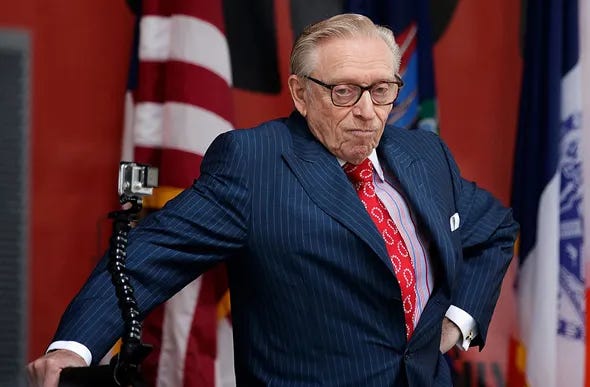
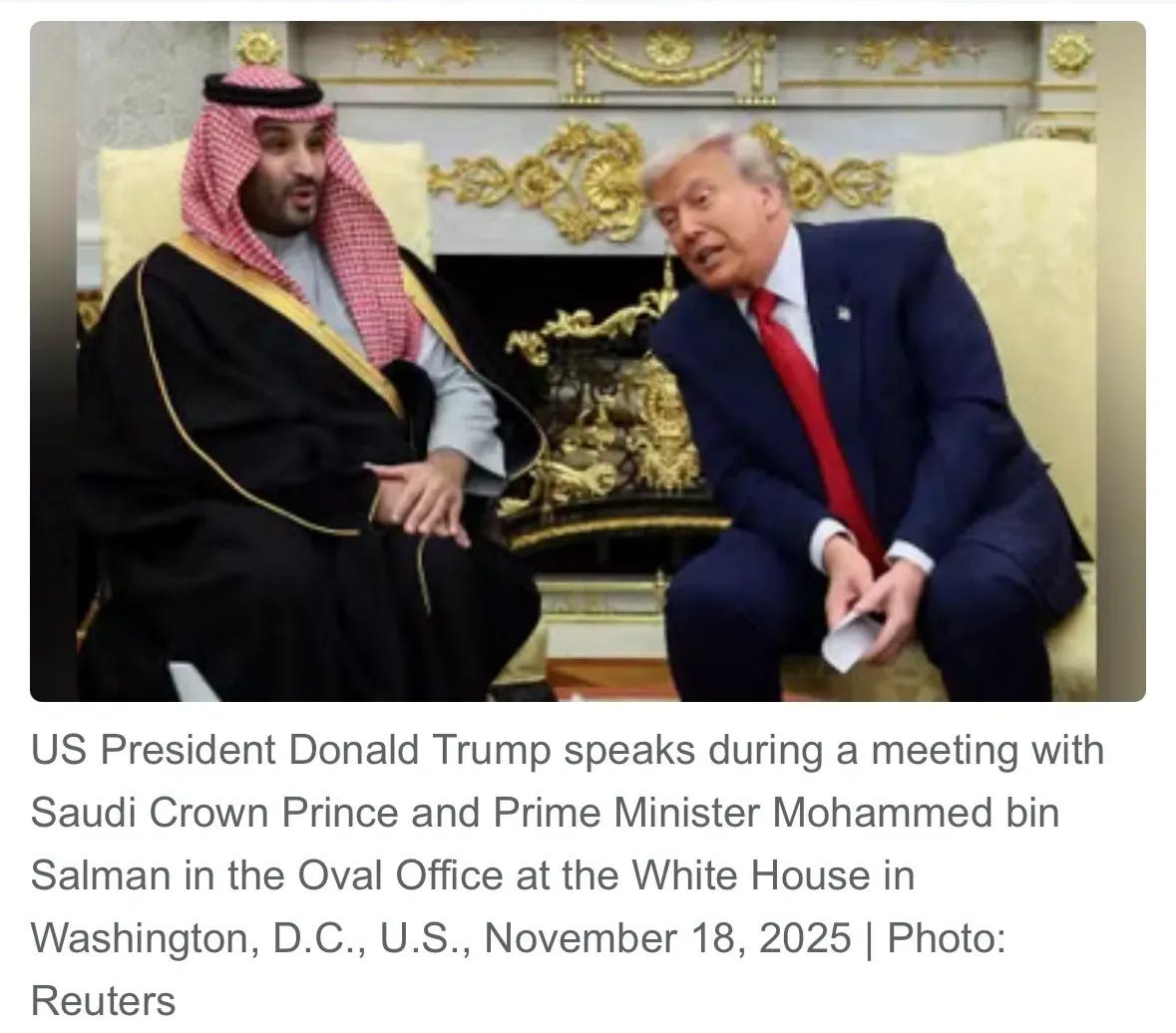
In November 2025, when Saudi Crown Prince Mohammed bin Salman arrived in Washington to meet with Trump, Larry Silverstein, age 94, with no formal role in U.S. trade policy, was there anyway, alongside Tal Kerret, who was deliberately vague about the nature of the announcement: either a Silverstein development in Saudi Arabia, or an NYU campus deal in the Gulf. One does not bring the man who rebuilt Ground Zero to a geopolitical summit as a conversation piece. Unless, apparently, one does.
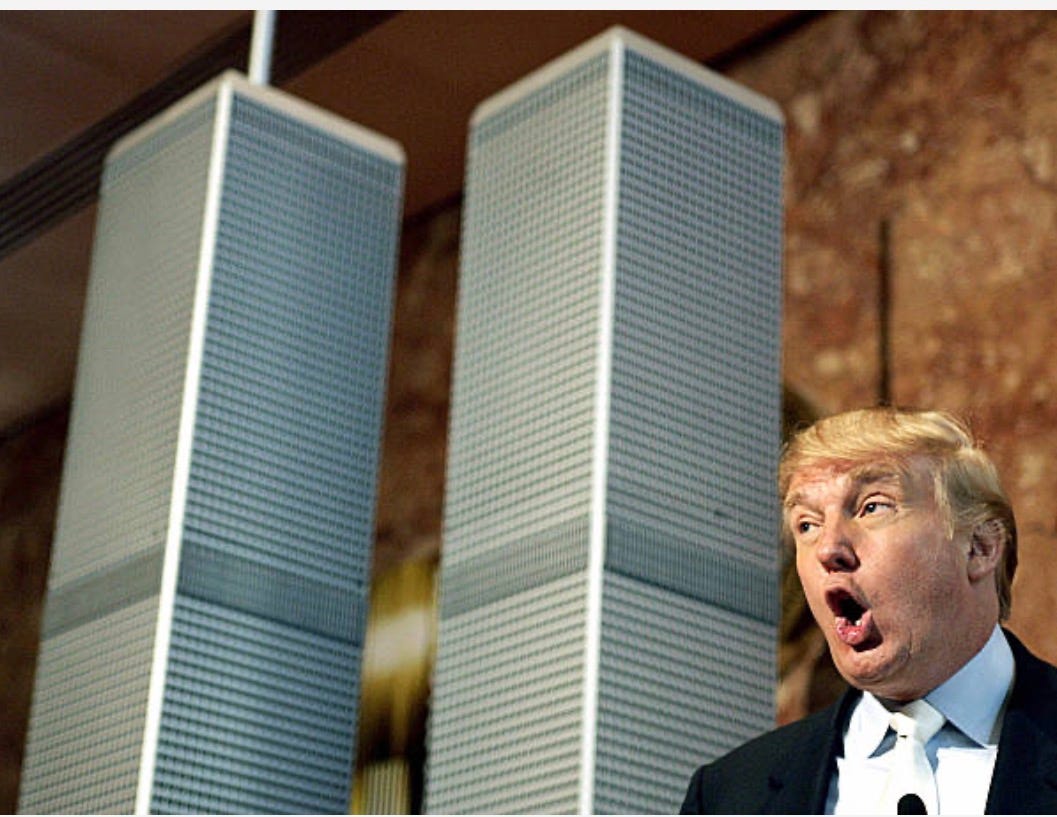
Trump is the essential connector in this story. He is the figure whose political project Lutnick paid $75 million to install, whose Gulf diplomacy Kushner built and Trump revived, and who stood next to a 94-year-old World Trade Center developer during a meeting with the man who controls a sovereign wealth fund larger than the GDP of most countries.
Trump did not invent the financial relationships described in this piece. He provided the governmental structure through which they could be operationalized at scale: the regulatory environment, the normalization diplomacy, and the cabinet composition that converts private capital relationships into policy outcomes. He is, in the language of the deals he has spent his life making, the closer.
The Blueprints Precede the Demolition
The symmetry between September 11 and the current moment is built into how these men talk about themselves. Lutnick invokes it directly. Silverstein’s entire public identity is organized around it. The narrative of catastrophic destruction followed by patient, disciplined rebuilding, funded by institutional capital, executed by trusted developers, sustained by military relationships and political access, has proven across two decades and two continents to be an extraordinarily resilient business model.
The same playbook. The same players. Different geography, different generation of wreckage.
The blueprints, as they say, have a way of preceding the demolition.
Sources
[2] Jerusalem Post: Howard Lutnick remarks
[3] FBC Lawyers: Silverstein Properties Limited NIS 633 million debt raise
[4] Calcalist: Silverstein bond issuance
[5] Haaretz: Israelis pouring money into U.S. housing
[6] Calcalist: Tal Kerret and Silverstein Properties
[7] Mann Report: New York real estate and FIDF
[8] FIDF New York Real Estate Division
[9] The Nation: FIDF gala protests
[10] Truthout: Billionaires subsidize Israeli military through U.S. nonprofit
[11] Friends of the Israel Defence Forces
[12] Calcalist: Ramat Gan reconstruction and renewal
[13] Dun’s 100: The Shaked Group
[14] Middle East Eye: Israeli firm invested $30 million in Kushner-owned properties
[15] Ynet: Menora urban renewal investment
[16] Middle East Eye: Kushner’s investment firm, Gulf money, and TTrump'sGaza plan
[17] Globes: Jared Kushner builds a Middle East business empire
[18] PR Newswire: Cantor Silverstein OZ Trust II closes above $470 million
[19] U.S. Senate Commerce Committee: Lutnick confirmation responses
[20] Forward: Who is Howard Lutnick?
[21] The Editors: Larry Silverstein at Tthe rump and MBS meeting
[22] eJewish Philanthropy: JDC and Israeli communities hit by Iranian missile fire
[23] Ynet: Bat Yam real estate
[24] Tidhar directors
[25] HaKirya
[26] Times of Israel: IDF to relocate 11 bases
[27] Sri Lanka Guardian: Israel military intelligence campus in Negev
[28] Silverstein Properties executive team
[29] UAE Wealth: Tal Kerret speaker profile
[30] Israel National News: Menora offices raided
[31] JTA: FIDF in crisis after internal report
[32] eJewish Philanthropy: FIDF leaked memo and fundraising practices
[33] JTA: FIDF doubles down on disputed claim
[34] CharityWatch: FFIDF's exclusive status amid leadership turmoil
I spoke a t an SF taxi commission meeting about nine eleven as a controlled demolition, they shut off my mic , later they killed my taxicab business, and gave me solitary isolation.
Also the realtors didn't like my idea to have residents in commercial spaces in SF....
Better we all die homeless and helpless
I love SF
Yes another ground breaker, sadly to say those words ground breaker
Your writing is the bomb
Hope they all go to jail that ought to. The murdererous douchebag fish...
God bless you
Brilliant Morgan. Fucking brilliant.