Peace Money
How the U.S. Rebranded China’s Peace Plan as a Profitable Corporate Takeover

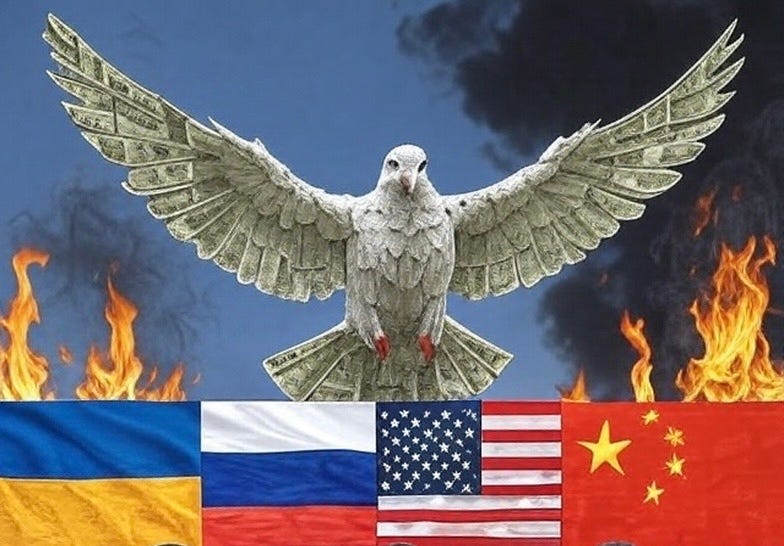
The 28-point U.S.-backed draft for an Ukraine settlement began might seem like a sign of imminent de-escalation. But a closer reading reveals a document not written in the language of compassion or restitution but of management—management of territory, capital, energy, and future market alignment. Each clause reads less like a concession to peace than a legal blueprint for reorganizing Eurasia’s logistics and financial flows under Atlantic oversight.
China’s own 2023 “Position on the Political Settlement of the Ukrainian Crisis,” by contrast, used almost identical vocabulary—sovereignty, reconstruction, non-bloc expansion—but attached no enforcement apparatus or profit clause. That difference reveals the competing intentions: Beijing drafted a framework of diplomatic neutrality to protect its global reputation; Washington appears to have re-purposed that framework as a corporate recovery plan dressed in humanitarian language.
1. Strategic Intent Disguised as Diplomacy
At first glance, both the Chinese and American texts strike a similar tone. They call for respect of sovereignty, the avoidance of nuclear escalation, and the reopening of grain and energy corridors. Yet where Beijing’s version lists principles, the American draft enumerates instruments: “security guarantees,” “reconstruction funds,” “joint working groups,” and “investment vehicles.” Each is tethered to Western control points—NATO, the World Bank, U.S. Treasury-supervised funds.
In practice, these institutions define the post-war economy’s currency denomination, payment routing, and credit hierarchy. Humanitarian provisions such as ceasefire, prisoner exchange, or de-mining become procedural fronts through which capital re-entry is administered. The plan’s wording converts moral obligation into managerial jurisdiction.
That is how strategic intent hides inside diplomatic prose. The entire post-war sequence—sanctions relief, rebuilding, infrastructure loans—is conditioned on compliance with Western-controlled verification channels. It keeps the financial umbilical cord dollar-anchored, preventing Ukraine’s eventual recovery from sliding into a yuan- or ruble-settled trade zone.
2. Destruction as the Pre-Investment Stage
The text’s emphasis on “reconstruction funds” makes sense only if the country to be reconstructed has first been comprehensively ruined. China’s 12-point plan assumes the cessation of hostilities, then gradual rebuilding. The U.S.-backed framework presupposes total infrastructural replacement—new grids, ports, and data centers to be financed through private-public consortiums.
That distinction matters. In economic terms, a destroyed country represents a clean balance sheet: debts can be written off, land titles consolidated, and labor costs reset. The longer the fighting persisted, the more leverage reconstruction financiers could claim later. Clause 12 of the American draft—detailing artificial-intelligence zones, gas infrastructure modernization, and mineral extraction rights—turns the peace into a market-entry strategy.
Nothing similar exists in China’s version. Beijing’s plan briefly mentions “post-war reconstruction,” but without naming beneficiaries or investors. Its concern is reputational—presenting China as a responsible power, not as a prime contractor. Washington’s text, by contrast, reads like a Request for Proposals.
3. Controlled Reintegration of Russia
Perhaps the most striking section of the 28-point plan is the deliberate scripting of Russia’s economic comeback: phased sanctions relief, staged re-entry into G-8 structures, and long-term U.S.–Russian joint ventures in energy, rare-earth extraction, and data-center development. On paper this looks conciliatory; in effect it is containment through interdependence.
The design caps Moscow’s intimacy with Beijing. By binding Russian commodities and Arctic infrastructure to Western capital, the U.S. can prevent Russia from becoming a pure resource appendage of China’s industrial engine. It echoes the 1970s logic of détente—engage to divide.
China’s 12-point paper takes the opposite posture: it treats Russia as an equal participant in an “inclusive security architecture” and never conditions peace on its economic realignment. The American rewrite weaponizes reintegration; it turns cooperation into a leash.
4. Global Trade Recalibration
Beyond the battlefield, the most consequential elements of the Western draft concern logistics. Clauses about Dnieper River navigation, Black Sea grain corridors, and Arctic resource projects are more than technicalities—they lock Eurasian trade into Western clearing systems before Beijing’s Belt and Road alternatives mature.
By reopening the Dnieper under international supervision and allocating Zaporizhzhya’s power output fifty-fifty between Kyiv and Moscow, the draft institutionalizes external oversight of Ukraine’s energy grid. When combined with the “Ukraine Development Fund” and World-Bank-supervised reconstruction finance, the result is a corridor network audited and insured in dollars.
For Beijing, that is a pre-emptive strike on its own ambitions. China’s peace plan made no attempt to exclude Western participation, but it assumed a multi-currency recovery market in which Chinese construction firms and lenders could compete. The U.S. version closes that door by inserting exclusivity clauses and dollar-denominated funds. It is peace as infrastructure capture.
5. Narrative Management
The rhetorical mimicry is almost theatrical. Phrases such as “sovereign equality,” “mutual security,” and “win-win cooperation” appear in both plans, but they function differently. In China’s diplomatic grammar those words project moral equilibrium; in the American draft they are camouflage for contractual asymmetry.
Borrowing Beijing’s language allows Washington to market its plan as “neutral,” to global audiences weary of Western militarism. Yet each “win-win” clause is followed by a caveat assigning supervisory roles to Atlantic institutions. Even the proposed “Peace Council,” nominally headed by a U.S. president, codifies Washington’s ultimate veto power.
This linguistic convergence is not accidental. U.S. strategists watched China gain soft-power credit across the Global South for offering a “multipolar” peace. Recasting that template with Western institutions at the helm allows Washington to reap the same legitimacy while keeping the financial plumbing unchanged.
6. China as Potential Security Guarantor
One question naturally follows: could Beijing have served as a stronger guarantor of Ukrainian security? In certain respects, yes. China’s advantage lies in its transactional neutrality. It trades with both Russia and Ukraine, retains leverage over Moscow’s fiscal health through yuan-settled energy purchases, and commands enough goodwill in the developing world to mediate reconstruction finance outside NATO channels.
However, Beijing’s weakness is credibility with Kyiv and Brussels. Because it never condemned Moscow’s invasion, any Chinese guarantee would have faced distrust from Ukraine’s Western partners. Yet on balance, a China-brokered arrangement—supported by India, Türkiye, and perhaps the U.N.—could have anchored Ukraine’s neutrality with genuine multilateral balance instead of one-bloc dominance.
Where the U.S. proposal promises enforcement through punishment, China’s version promises equilibrium through restraint. The former secures compliance via threat; the latter via interdependence. Which is safer for long-term peace depends on whether one believes deterrence or trust produces stability.
7. The U.S. Framework as Global Template
Seen from a systems perspective, the 28-point draft is not merely about Ukraine. It is a prototype for post-conflict reconstruction anywhere a proxy war has exhausted itself. Its clauses could be replicated for Taiwan, the South Caucasus, or even the Sahel: immediate ceasefire, demilitarization, neutralization, Western-supervised rebuilding, and partial reintegration of sanctioned states.
The architecture fuses two doctrines—neoliberal recovery economics and Cold-War containment—into a single instrument. Conflict becomes a precursor to investment, and investment becomes the new form of control. That logic explains why the “peace” vocabulary is indistinguishable from the project-finance vocabulary used by global development banks.
China’s plan, by contrast, is politically self-limiting. It cannot impose compliance, nor can it extract rents. Its leverage is reputational, not structural. That makes it better suited to genuine mediation but less effective at ensuring Western-style predictability of returns.
8. The Moral Optics of Multipolarity
Another reason observers conflate the two plans is optics. Both reject “Cold-War mentality,” both call for dialogue, both criticize unilateral sanctions. Yet their moral orientations diverge. Beijing’s emphasis is on principle—non-alignment, humanitarian access, sovereignty. Washington’s version subordinates morality to manageability: it promises peace that can be insured, bonded, and securitized.
In a sense, both are realist documents, but China’s realism is reputational—peace as image. The U.S. realism is commercial—peace as instrument. One seeks soft-power credit; the other seeks contractual leverage.
9. The Economics of Dependency
Consider Clause 14 of the U.S. draft: frozen Russian assets converted into $200 billion for Ukraine’s reconstruction, half the profits to the U.S., half to a joint investment vehicle. Economically, this transforms confiscated wealth into the seed capital for a dollarized dependency cycle. Each “rebuild” tranche would require Western auditing and repayment guarantees.
China’s plan proposed no such mechanism. Had Beijing led reconstruction financing, funds would likely have flowed through multilateral development banks in which China holds major stakes—the Asian Infrastructure Investment Bank or the New Development Bank—allowing broader currency diversity and less political conditionality. That alternative would have diluted the West’s monopoly but offered more breathing space to local industries.
10. Security Guarantees and the Illusion of Neutrality
Clause 5 of the Western draft—“Ukraine will receive reliable security guarantees”—appears benevolent until one traces its operational form. The guarantees are extended by NATO states, policed by U.S.-led monitoring groups, and conditioned on Ukraine’s constitutional renunciation of NATO membership. In effect, Ukraine becomes a protectorate: outside the Alliance but bound to its rules.
Beijing’s peace paper contained an implicit alternative. It called for “the establishment of a balanced, effective, and sustainable European security architecture,” language that suggests multiparty guarantors rather than a single bloc. That approach would have required cooperation between the Organization for Security and Co-operation in Europe, the United Nations, and regional powers. It is slower but fairer.
11. The Information War Dimension
Peace documents are also information operations. The U.S. version, by mimicking China’s vocabulary, inoculates Western audiences against Beijing’s diplomatic appeal. It tells the world: we, too, are capable of multipolar rhetoric—just with better enforcement. In propaganda terms, that is effective; it neutralizes China’s claim to moral leadership while retaining command of the narrative economy.
For Beijing, this presents a dilemma. If it rejects the Western plan outright, it appears obstructionist. If it supports it, it legitimizes a process that sidelines Chinese capital. Hence China’s cautious silence since the leak of the 28-point text: neither endorsement nor condemnation, only reiteration of its own plan’s principles.
12. The Question of Accountability
To many outside observers, especially in the Global South, the contrast between the two plans exposes the asymmetry of accountability. Beijing’s plan, however self-interested, would make peace the shared responsibility of multiple actors. Washington’s plan centralizes responsibility—and therefore blame—within a U.S.-led consortium. That model risks perpetual extension of influence under the guise of reconstruction oversight.
If peace becomes a subscription service managed by international lenders, sovereignty dissolves into contract law. Ukraine’s tragedy would then mark the transition from kinetic warfare to financial trusteeship—a pattern likely to repeat wherever infrastructure can be privatized.
13. Which Plan Serves Stability?
Measured purely by stability outcomes, China’s framework, though vague, might have offered a sturdier long-term equilibrium. Its neutrality, economic flexibility, and emphasis on dialogue reduce the risk of relapse into hostilities. The U.S. draft, for all its detail, bakes in dependency: sanctions triggers, profit-sharing clauses, and enforcement councils that keep both combatants under permanent surveillance.
The Chinese model assumes peace as an organic balance; the U.S. model assumes peace as a managed portfolio. One trusts equilibrium, the other trusts compliance. History suggests that managed peace rarely endures once the managers change.
14. The Broader Meaning of “Re-engineering Eurasia”
In that sense, the American framework represents not a betrayal of peace but its redefinition. “Peace” no longer means cessation of war; it means the installation of an integrated logistics regime stretching from Poland to the Black Sea and north to the Arctic. Pipelines, grain corridors, data cables, and energy grids become the real front lines of control.
That transformation mirrors earlier precedents—the post-1945 Marshall Plan and the 1990s Balkan Stabilization pacts—each marketed as benevolent reconstruction, each resulting in deep structural dependency. The Ukraine plan simply updates the formula for the digital age: include artificial-intelligence clusters, data centers, and rare-earth processing nodes, all financed through U.S. and EU capital pools.
15. Why People Miss the Pattern
Many citizens, overwhelmed by moral narratives of good versus evil, overlook the contractual dimension. They hear “aid,” not “equity stake”; “guarantee,” not “liability.” Media coverage filters geopolitical engineering through humanitarian imagery—rebuilding schools, clearing mines—without tracing who owns the rebuilt power plants or who underwrites the debt.
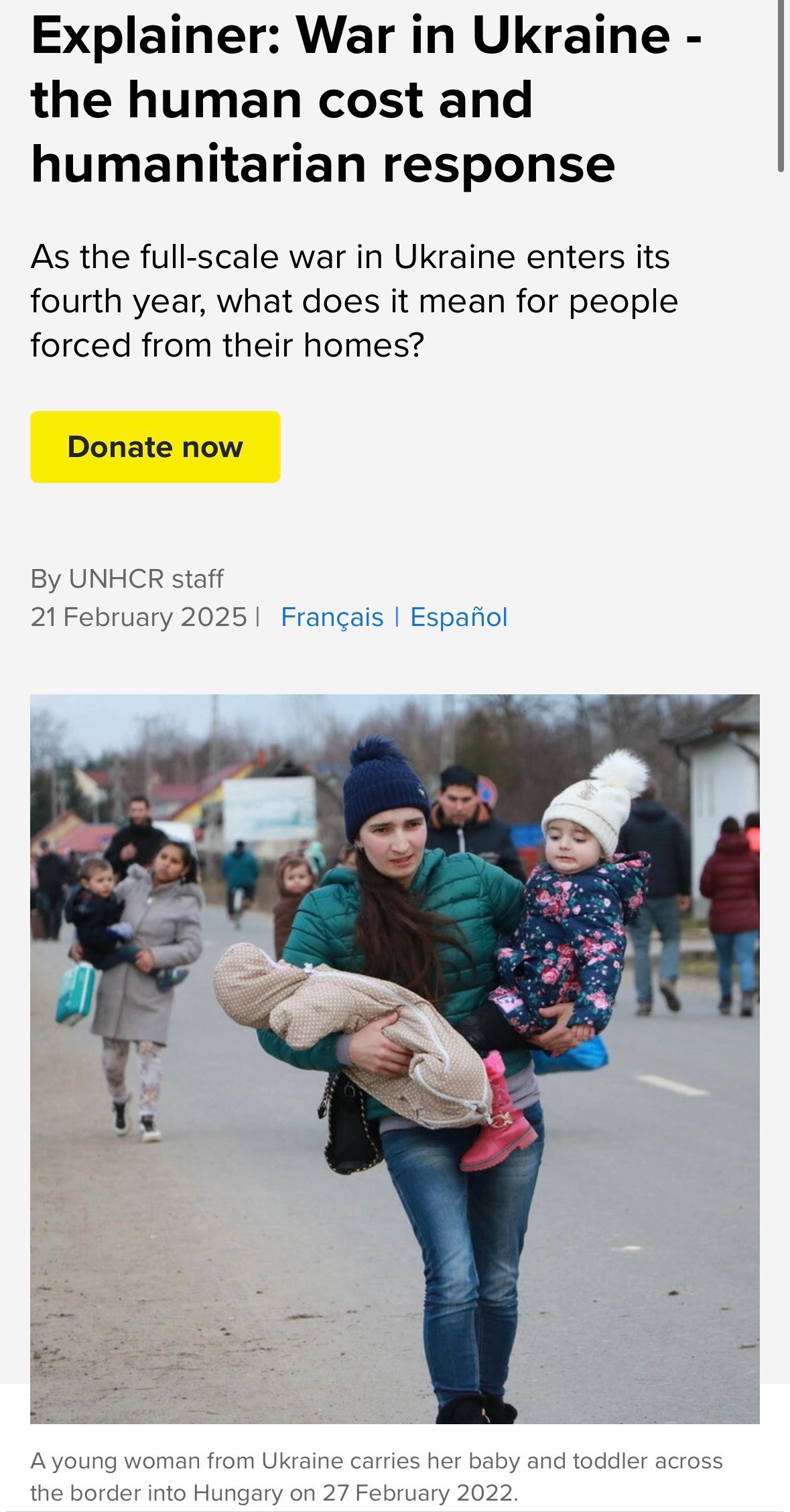
Understanding the plan as a financial document rather than a moral one exposes its true continuity with previous U.S. strategy: use crises to re-inscribe systems of settlement and clearing. The suffering is real, but the accounting is calculable.
When set beside China’s 12-point paper, the U.S.-backed 28-point framework looks less like an independent initiative than a commercialized derivative. It borrows Beijing’s syntax of sovereignty and dialogue but replaces moral balance with contractual control. The result is a peace plan that manages rather than heals, that rebuilds under supervision rather than restores autonomy.
Had China or a genuinely multilateral consortium served as security guarantor, Ukraine’s recovery might have unfolded within a broader Eurasian balance rather than an Atlantic monopoly. That outcome would not have been perfect—no peace ever is—but it would have diversified risk and diluted the economic weaponization of aid.
The tragedy is that both plans, in their different ways, reduce Ukraine from subject to object—from a state seeking peace to a platform for geopolitical architecture. And that, perhaps, is the quiet meaning of modern diplomacy: the management of ruin in service of order.
“The U.S. draft, for all its detail, bakes in dependency: sanctions triggers, profit-sharing clauses, and enforcement councils that keep both combatants under permanent surveillance.”
The ever-expanding tentacles of the Matrix. Ukraine is between a rock and a hard place. I don’t have any great faith or trust in the CCP, (source: lived in Beijing 2 years, studied Mandarin) who are by now well into constructing their own domestic dystopia. The Judeo-American alliance on the other hand, has this shit down to a science. A thoroughly inhuman one.
Colour me sceptical. But doesn’t all this proposed rebuilding; renovation and fabulously anticipated modern day renaissance; of a country that’s been earmarked for transition for decades. Think: chief puppet Obama back in the day (2012-14).
The constant tampering and tweaking of regimes by the American Empire; and all who sail in her.
These latest sincere peace proposals, by all the usual suspects, merely serve to further consolidate the ‘old world order’. That the ‘superpowers’ still exist. And it’s the old cat and mouse-cold war-space race-communist-versus-free market bollocks. Again.
You know the Pepsi-coke challenge; that old chestnut. Both companies owned by Vanguard or Blackrock. Hmm.?
Similarly, the ‘peace plans’ more likely than not; knocked up by the same scriptwriters. In Chinese, Russian, Yiddish and Crimean Tatar.
If these vampires can close down the world. Kill at will. Shut down economies. Scare the living shit out of hard working folks…
…Perpetuate proxy wars, using media shills. And have punters hiding in broom cupboards wearing paper masks; while they’re out catching ‘terrorists’ to save the world….
.. Then perhaps we need to be slightly careful about just exactly what is being ‘Unilaterally’ ratified next.!!