
Hezbollocks
The Most Surveilled/Militarized Border On Earth Defenceless Against Dudes On Mopeds

I really hoped this one was going to fade. These stories usually do — the breathless escalation cycle runs for two weeks, the footage turns out to be from a video game, the dramatic military breakthrough turns out to be a press release that three wire services moved simultaneously at 6 AM on a Tuesday, because nothing says organic breaking news like perfect editorial synchronization before coffee. Instead, the drone footage keeps multiplying, and the insistence that each new clip represents a dramatic escalation has taken on the specific cadence of something being administered rather than reported — which is, if you have been paying attention to how these things work, itself a form of information.
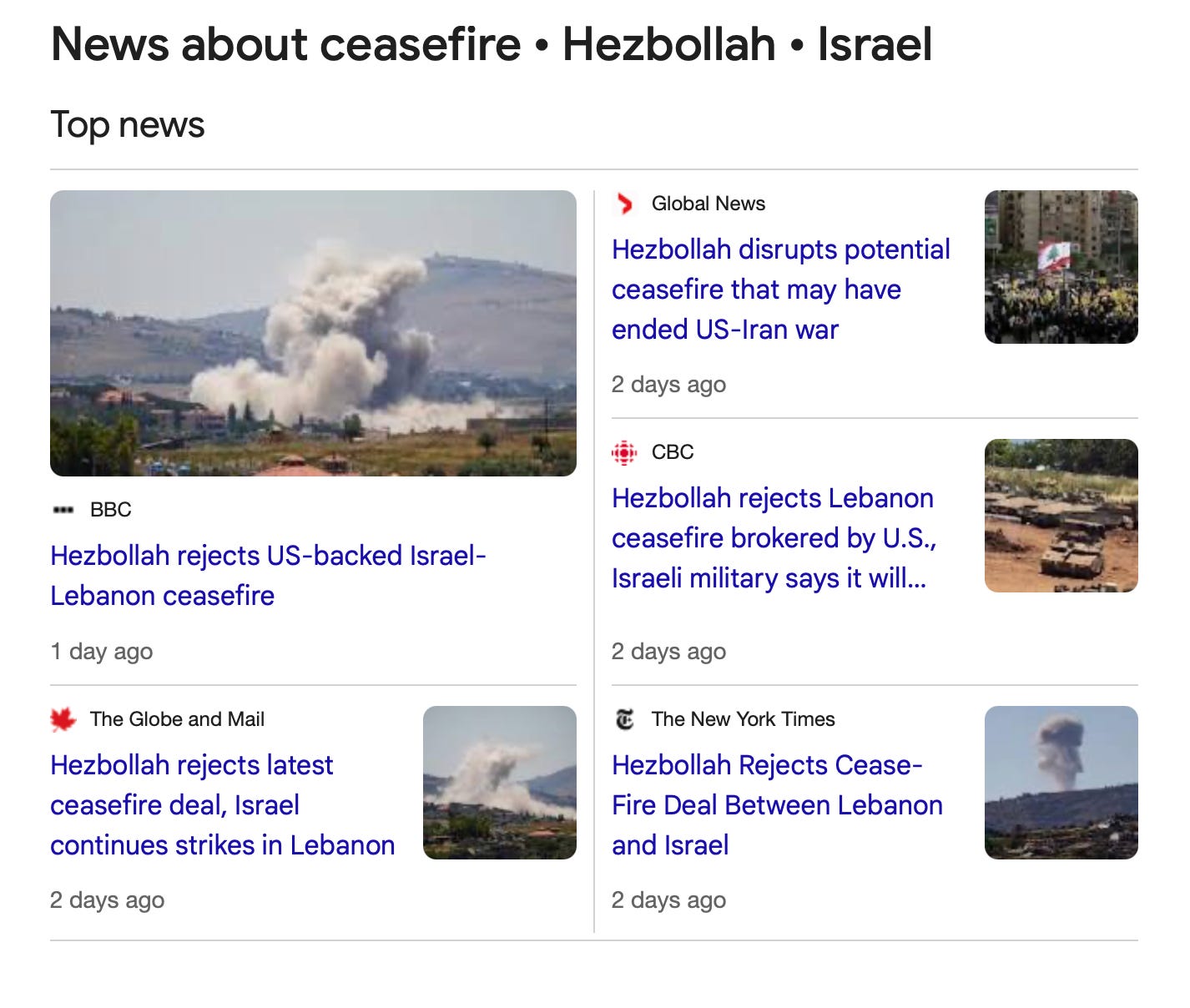
There has never been a media consensus quite like this one. CNN and Fox and Reuters and the BBC and Al Jazeera — organizations that cannot agree on the spelling of a street name under normal circumstances — have achieved remarkable editorial harmony on the question of what is happening on the Lebanese-Israeli border. What is happening, they all agree, is that a ragtag militia, reportedly disarmed eight months ago, operating out of a country that cannot keep its lights on, is running a precision drone campaign sophisticated enough to defeat the electronic warfare systems of the eighth-largest arms exporter in human history, backed by the full weight of the American military empire — and losing.
Like they haven’t been training for this for over a decade.
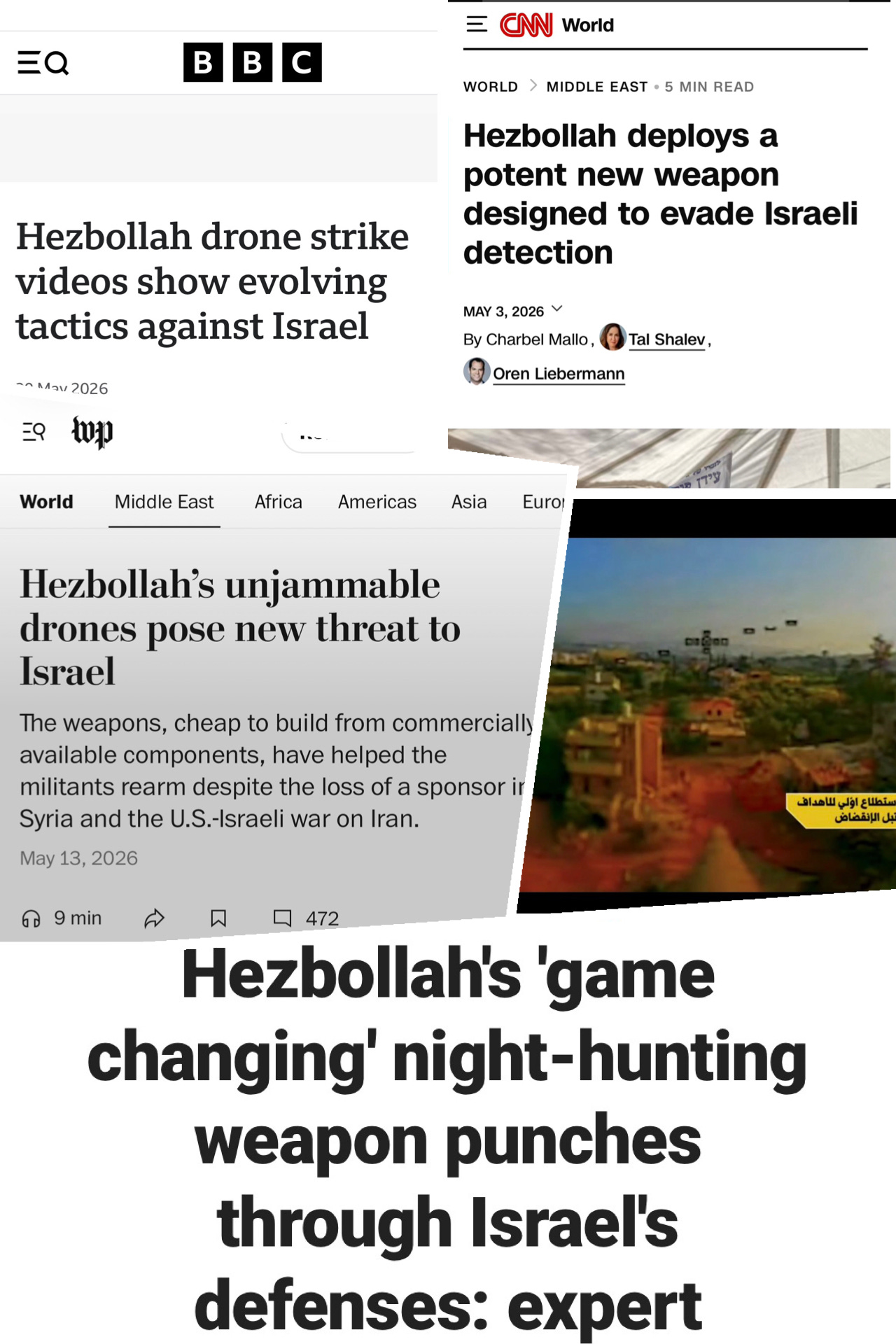
Nobody in any of those newsrooms appears to have raised a hand and asked the question that a moderately curious twelve-year-old might ask: if that’s true, what exactly have we been buying?
(The Israeli drone footage and the Hezbollah drone footage look identical. Let that land for a minute.)
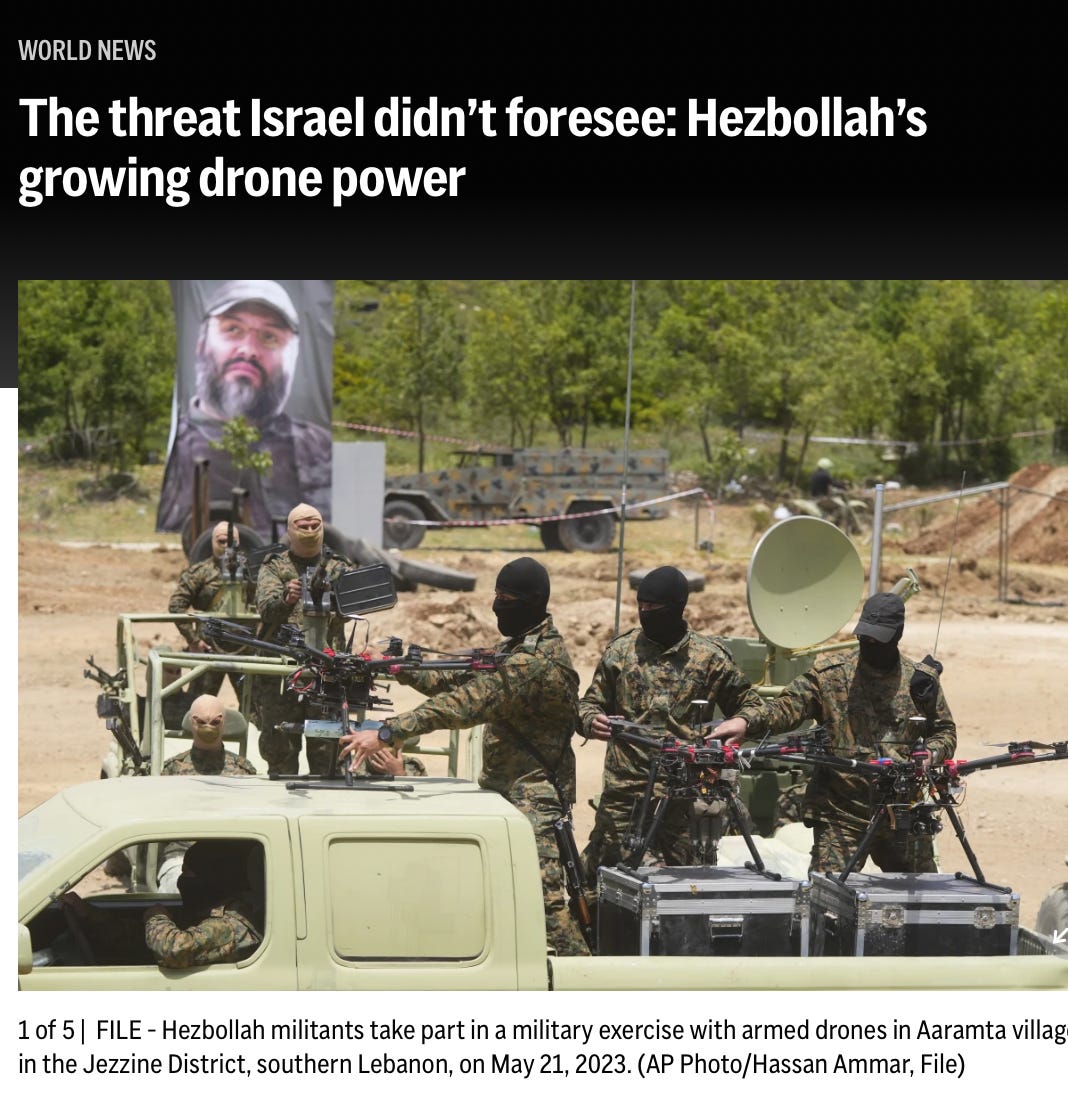
The claim is that a non-state actor operating in a country that cannot keep its electricity on for more than a few hours a day — whose banking system collapsed so completely that the World Bank described it as one of the worst financial crises since the mid-nineteenth century, whose currency lost roughly 98% value against the dollar — is manufacturing, deploying, and operationally sustaining a fleet of fibre-optic guided FPV drones sophisticated enough to defeat Israeli electronic jamming systems and conduct what multiple outlets describe as an expanding precision-strike campaign along the border.
Hezbollah training?
You get how batshit this sounds right?
But it seems the people will believe anything.


The videos circulate quickly, big accounts push them hard, the ‘geolocations’ arrive from ‘open-source researchers’ legitimize everything with red arrows and rectangles on them within hours — and if you believe those researchers are independent hobbyists operating on curiosity alone, it is worth knowing that open-source geolocation networks have a well-documented history of functioning as the respectable civilian face of narratives that serve very specific institutional interests, lending the appearance of crowd-sourced verification to claims that arrive pre-packaged.
Who cares that the footage—released by parties with strong incentives for your emotional reaction—moves through platforms in an era when the US military has documented programs for generating near-indistinguishable battlefield imagery? Except, treating drone strike videos that look like video game renders as authentic is a choice.


Here Is What Is Actually Installed On And Around That Border
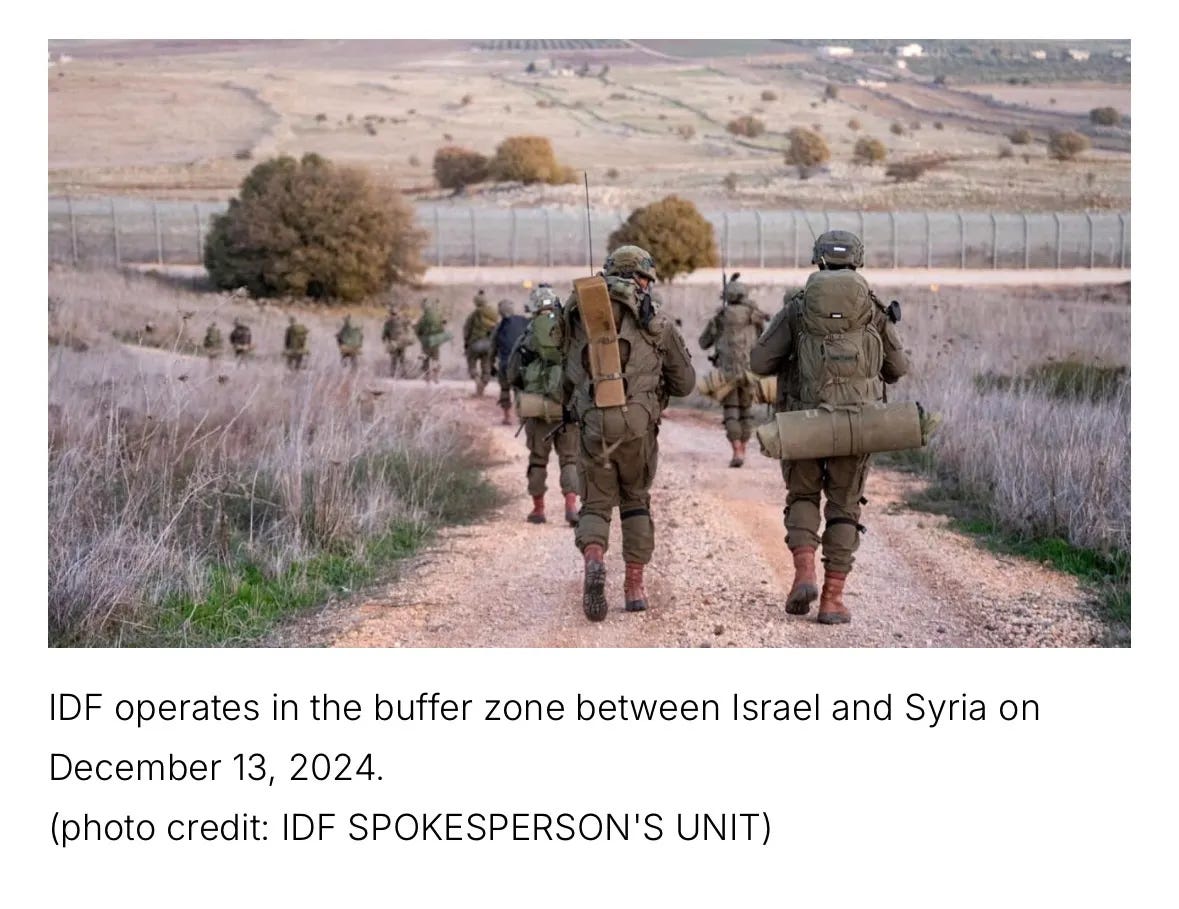
Israel maintains the most expensive and technologically dense surveillance/ interception system ever built along a land boundary. Iron Dome, David’s Sling, and Arrow provide layered missile defense. As of late December 2025, Israel deployed the Iron Beam—a high-energy laser system developed with $1.2 billion in Pentagon support and partners like Lockheed Martin/Rafael. It intercepts drones at the speed of light for roughly $2 per shot, offering a game-changing cost advantage in prolonged conflicts. Israel ranked as the world’s eighth-largest arms exporter in 2024, with ~$15 billion in sales, moving proven systems to Germany, Finland, India, and (quietly) several Muslim-majority states including Morocco and the UAE. Ongoing threat environments sell hardware and justify sustained investment.
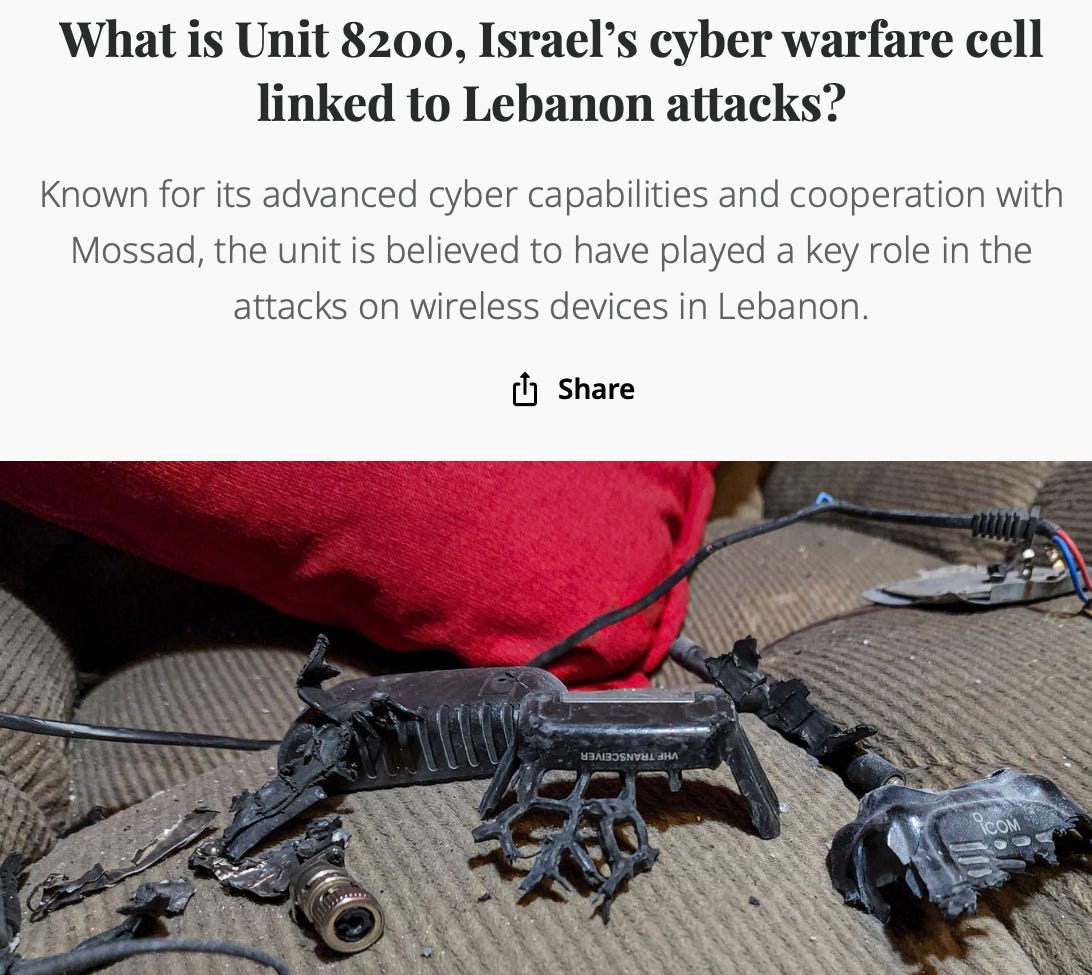
Above the border: persistent surveillance drones maintaining station for up to twenty-four hours, intercepting mobile communications, WiFi, and GPS data across the entire country. Below it: seismic tunnel sensors. Along it: thermal imaging, radar, remote-controlled weapon stations, and AI-assisted automated targeting. And above all of it, Unit 8200’s Urim listening station in the Negev — described by Le Monde Diplomatique as one of the largest signals intelligence facilities on earth — sharing raw product with the NSA under a formal bilateral arrangement that has been in place for decades
This is the apparatus that cannot locate the fiber-optic cable warehouse. Perfectly normal. Nothing to see here, presumably.
Does that make sense to you???
That a US-controlled Lebanon and a US-controlled Israel would allow a threat to exist between it?
Indistinguishable CGI militia propaganda is easy to make now. Even someone with no experience can throw together something convincing enough to circulate, and frankly, it does not even have to be good.
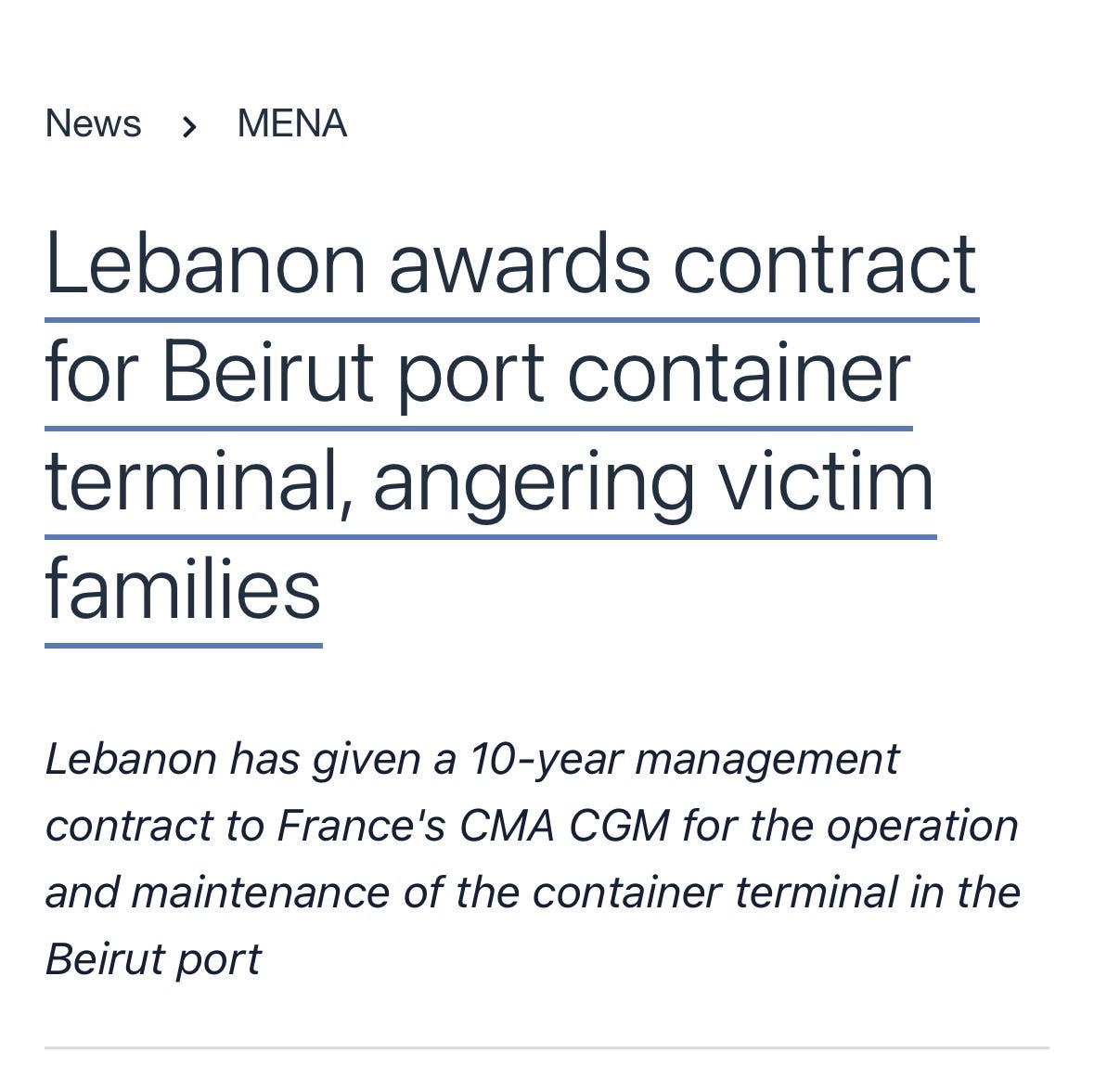
The supply chain argument is where the official story becomes genuinely difficult to hold together with a straight face.
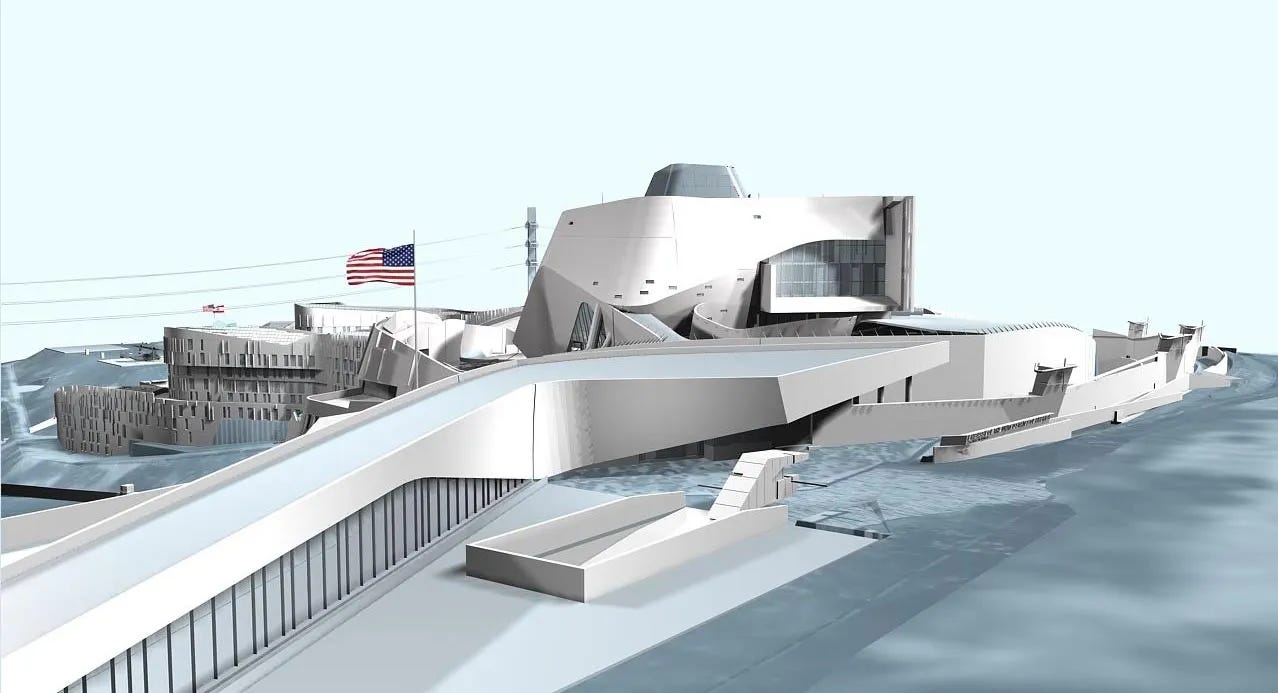
Fiber-optic guided drones require specialized cable, specific electronic components, assembly infrastructure, trained operators, and testing ranges — all of which carry a physical footprint, all of which must exist inside a country roughly the size of Connecticut. That country hosts, as of 2023, a one-billion-dollar American embassy complex — the second largest in the world after Baghdad’s — spanning over 40 acres on a Beirut hilltop, housing a data collection facility functioning as the regional headquarters for US intelligence, with what Intelligence Online described as unlimited Defense Intelligence Agency access to Lebanese military intelligence, in exchange for the $60 million in annual funding that keeps the Lebanese army operational. The United States has disbursed $3 billion to Lebanese security forces since 2006, maintains unlimited access to Lebanese military intelligence, and operates a signals architecture shared with Israel covering the entire country.
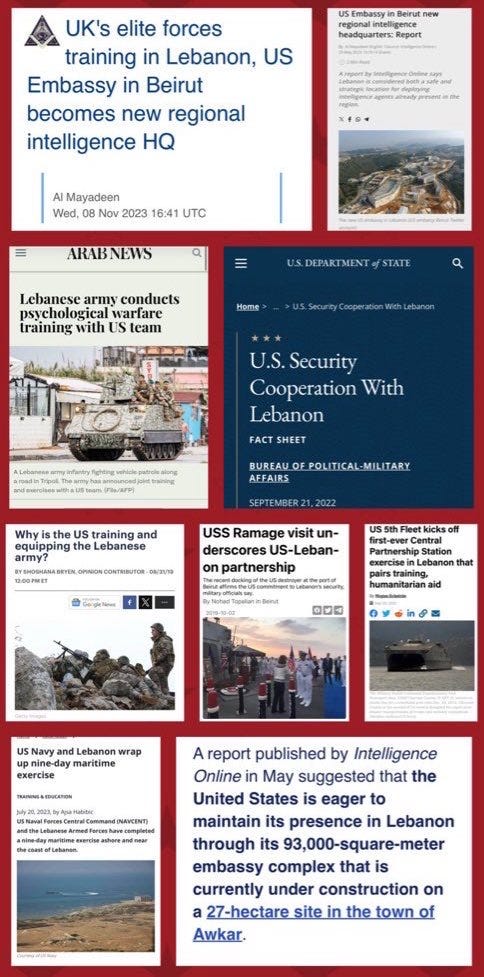
The supply chain for the drone program remains, apparently, a mystery. They are working on it. Check back later.
This is the same Lebanon where the pound collapsed from 1,500 to the dollar to 89,500 to the dollar because the external financial architecture maintaining it was quietly removed. The IMF conditions Lebanese government access to recovery financing on the specific wording of bank secrecy legislation and has not found a comparable mechanism for the drone assembly facility. You can control a country’s currency, its banking law, its military funding, its intelligence output, and the hilltop your spy headquarters occupies — but the warehouse remains elusive?
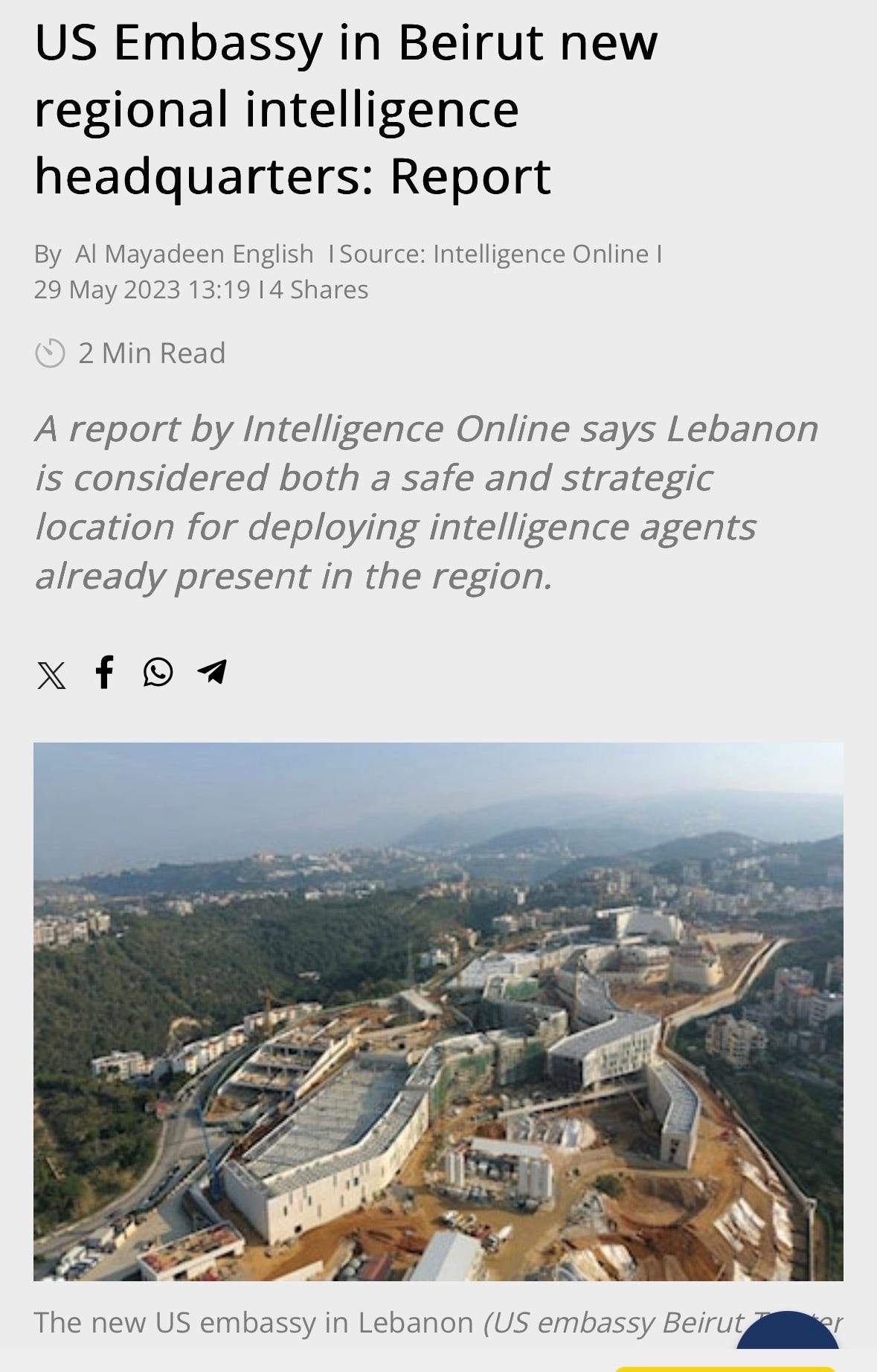
A country that cannot maintain a currency peg or keep its hospitals powered is simultaneously defeating the electronic warfare systems of the eighth-largest arms exporter on earth, and the billion-dollar intelligence complex on the hill is stumped. Sure
Where the Strikes are Actually Landing
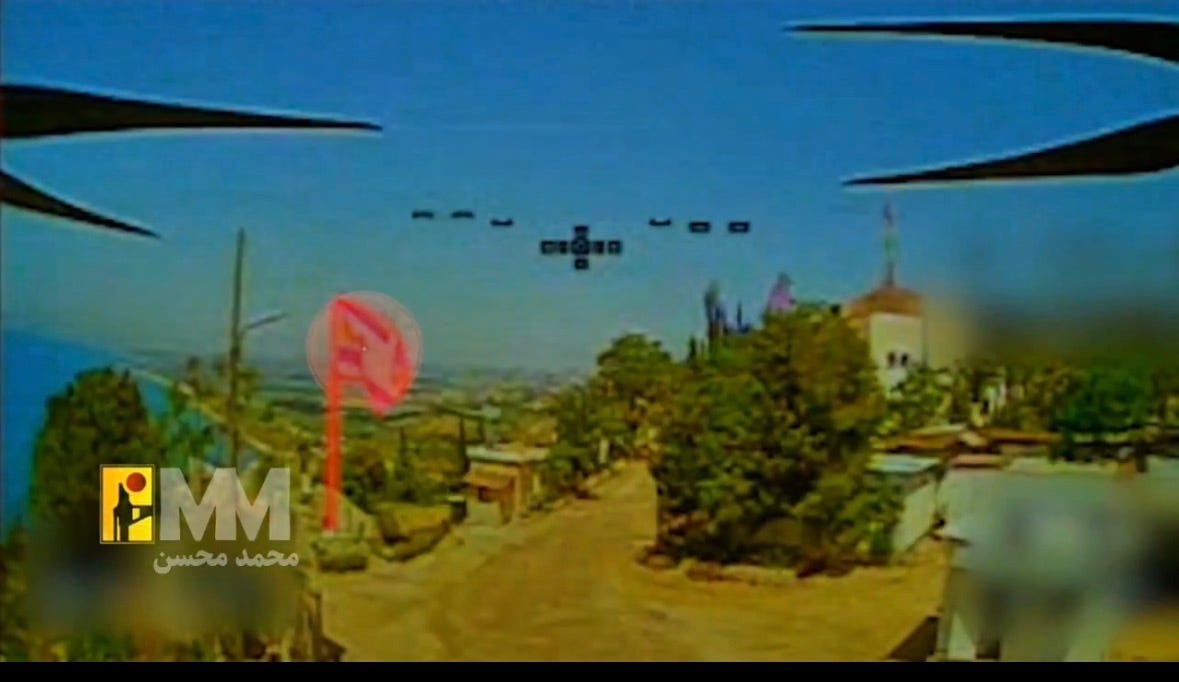
Now consider where the strikes are actually landing, because this is where the story stops being merely implausible and starts being geometrically interesting — and for readers who followed the Strait Theatre analysis, which mapped how strikes across the broader regional theatre were landing with remarkable consistency on infrastructure nodes and development corridors rather than purely military targets, what is happening in southern Lebanon will look immediately familiar.
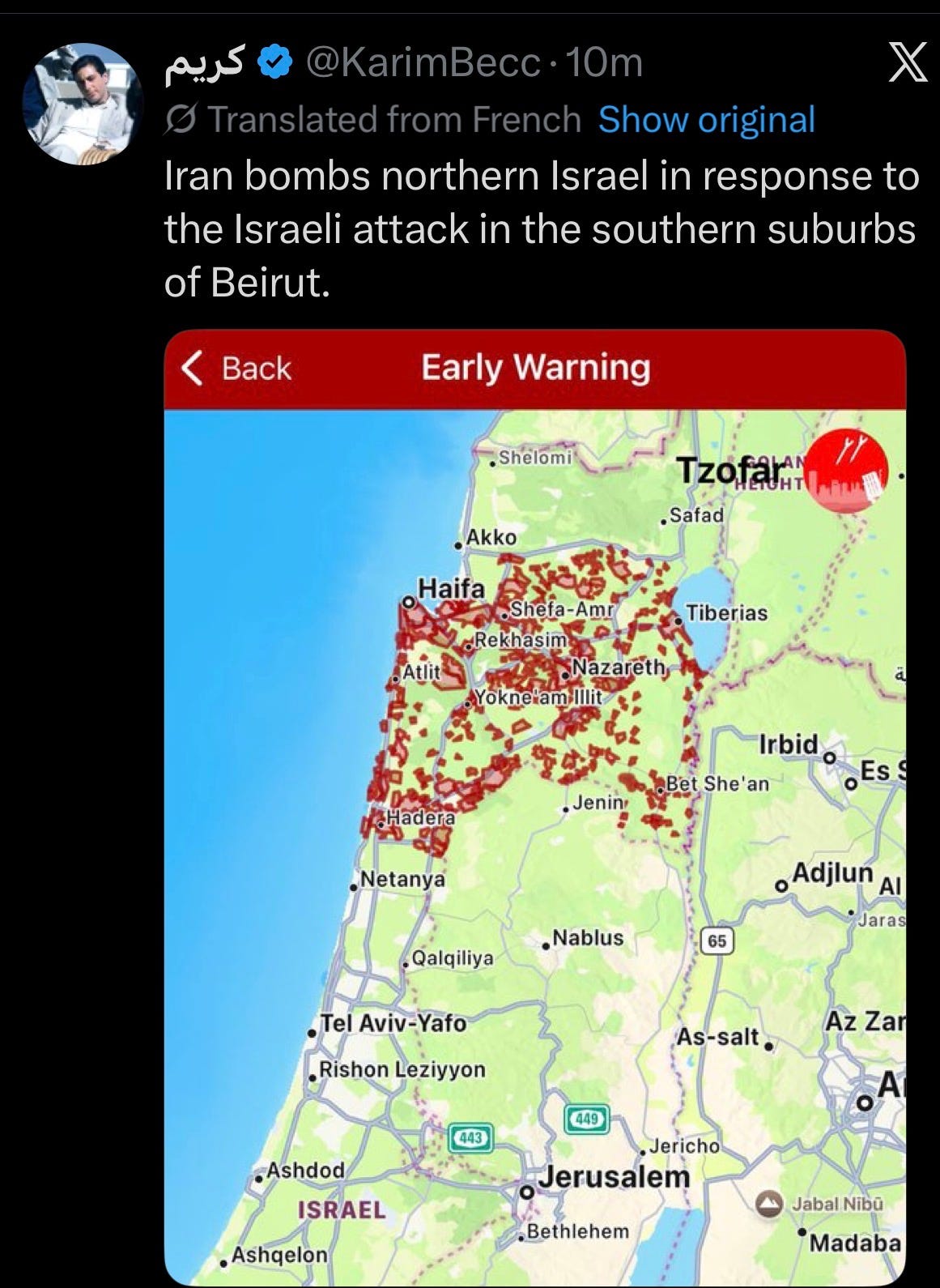
The areas being demolished along the southern Lebanese border do not follow a pattern consistent with reactive military targeting of emerging threats. They correspond, with uncomfortable specificity, to zones identified in regional infrastructure planning documents and development financing proposals as areas requiring clearance for the trade corridor projects that represent the actual long-term strategic prize in this geography. The border villages of the southernmost tier — Kafr Kila, Maroun al-Ras, Yaroun, Houla, Naqoura, Aitaroun — were between 90% and 100% evacuated before the demolition began in earnest. New Lines Magazine reported in May 2025 that these villages have become ghost towns, that a 150-acre forest of hundred-year-old oak trees was destroyed over the course of the campaign, and that residents who return during the day leave before nightfall because there is no electricity, no water, and nothing left to stay for.
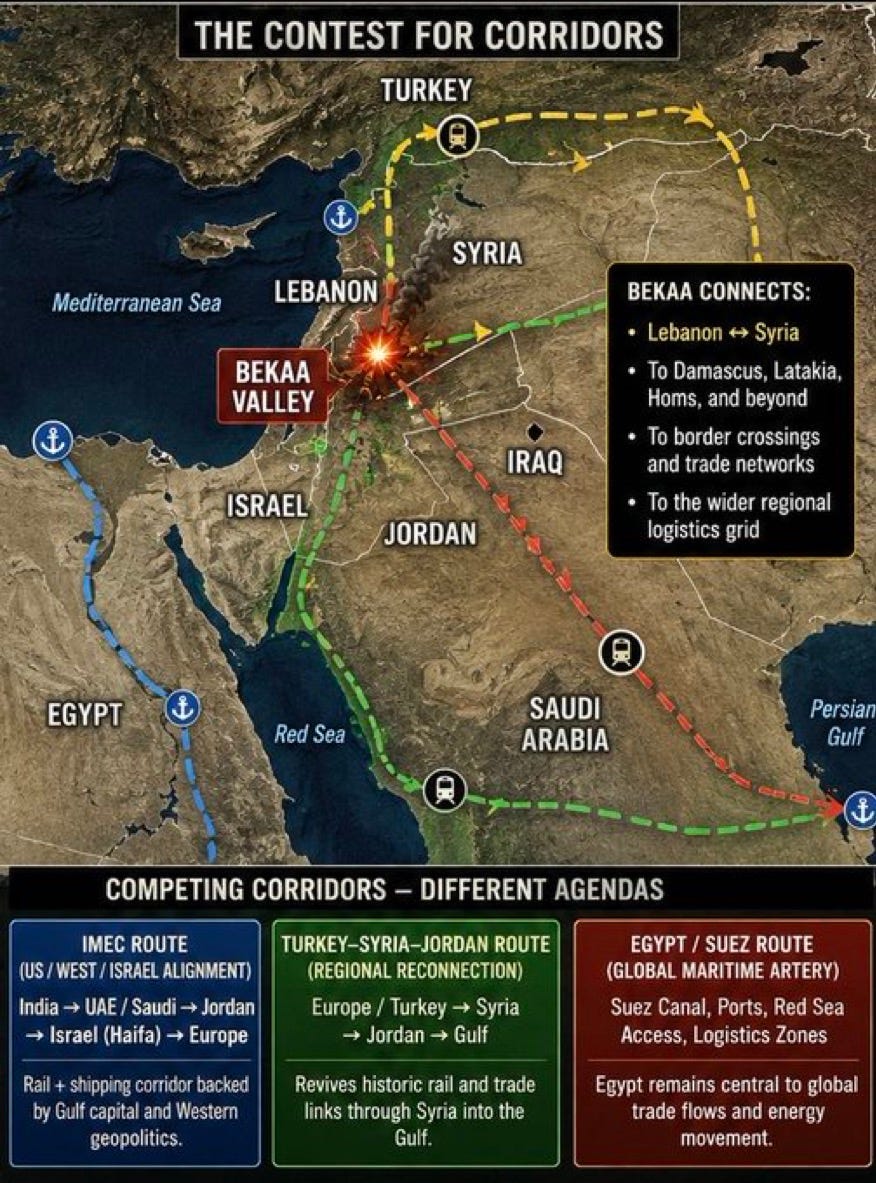
Here is what this is actually about, stated plainly: this is land acquisition, conducted through the mechanism of a conflict, and the reconstruction contracts for the territory being cleared were not written after the clearing began because that is not how reconstruction financing works. The World Bank has already approved $250 million for recovery and reconstruction in conflict-affected Lebanese areas. The damage assessment puts total reconstruction needs at $11 billion. That money flows somewhere specific, to contractors and developers and infrastructure firms whose involvement in the post-conflict reconstruction of territory was arranged before the territory needed reconstructing, which is a sequencing pattern that should raise at least one question in any newsroom on earth.
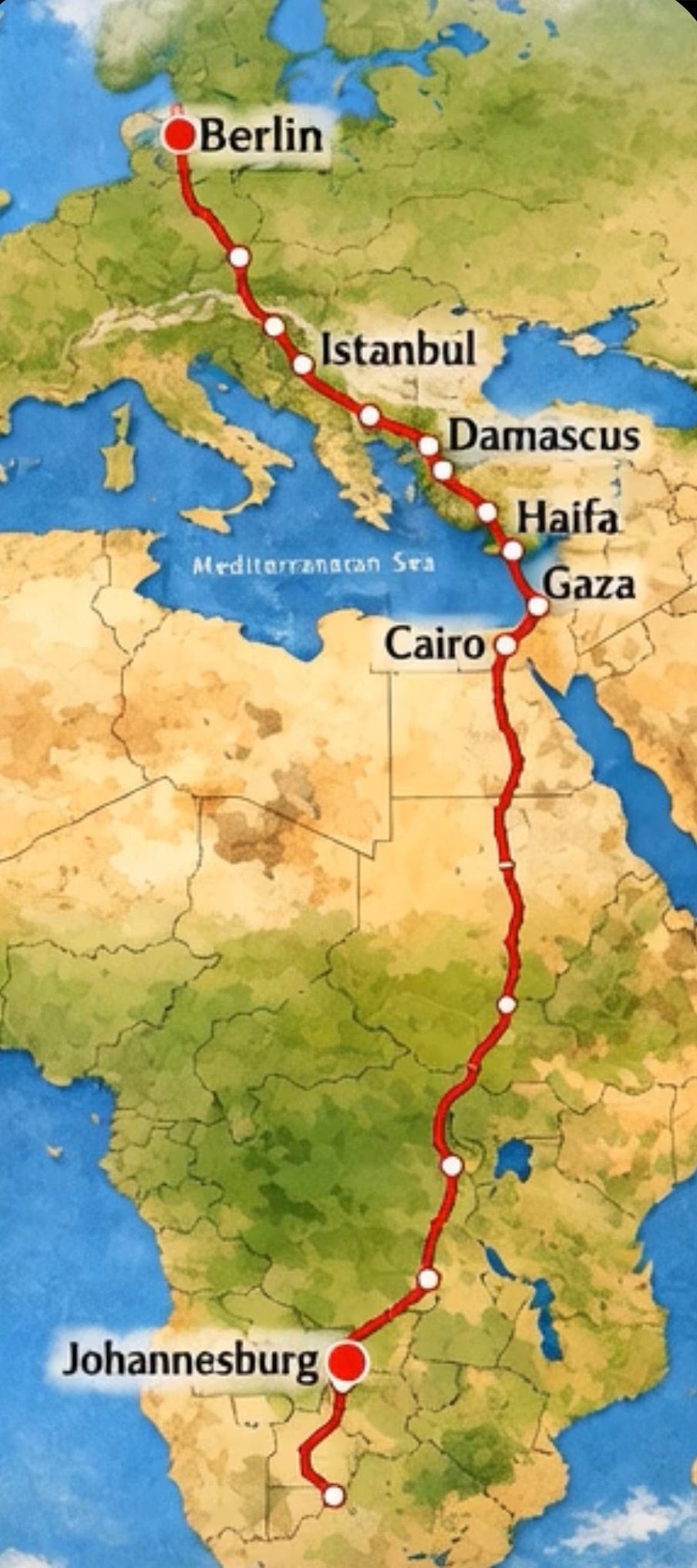
The Railway Corridor
Lebanon’s railway network — originally built during Ottoman rule, inaugurated in 1895, running from Beirut south toward Haifa and north toward Tripoli and Damascus — has been defunct since the civil war. Lebanon’s new leadership, as of early 2025, is actively promoting its revival, explicitly positioning the restored network as a link to Syria and Iraq and a potential node in China’s Belt and Road Initiative. The European Union and European Investment Bank are already involved in feasibility planning for the Beirut coastal section. The southern corridor — the route that runs along precisely the border zone currently being cleared — is the missing link in a rail network that would connect the eastern Mediterranean to the broader regional trade architecture. That architecture is currently the subject of a competition between two opposing visions: one backed by the UAE and Israel connecting Gulf states to Mediterranean ports through normalized Abraham Accords infrastructure, and one backed by Turkey and its neighbours routing trade through Damascus and Beirut toward a connectivity framework that includes Chinese Belt and Road positioning. The territory being demolished sits at the fulcrum of that competition, and whoever controls its reconstruction controls the route.

Seems Normal
This is what normalization actually looks like — and not in the emotional sense but in the precise diplomatic one. The Abraham Accords framework, which has been the organizing logic of American Middle East policy for years, requires Lebanon to eventually enter a normalized relationship with Israel and with the US-aligned regional order. Lebanon cannot do that while a parallel state with 150,000 rockets controls its south, vetoes its governments, and sits across every trade and infrastructure corridor that the region’s economic future runs through. The clearing of southern Lebanon is not a military campaign with diplomatic consequences. It is a normalization process with military methods, and the Lebanese government — which has no army capable of objecting, no currency to fund resistance, no financial system outside IMF conditionality, and a billion-dollar American intelligence complex on its most strategic hilltop — is participating because it has no meaningful alternative.
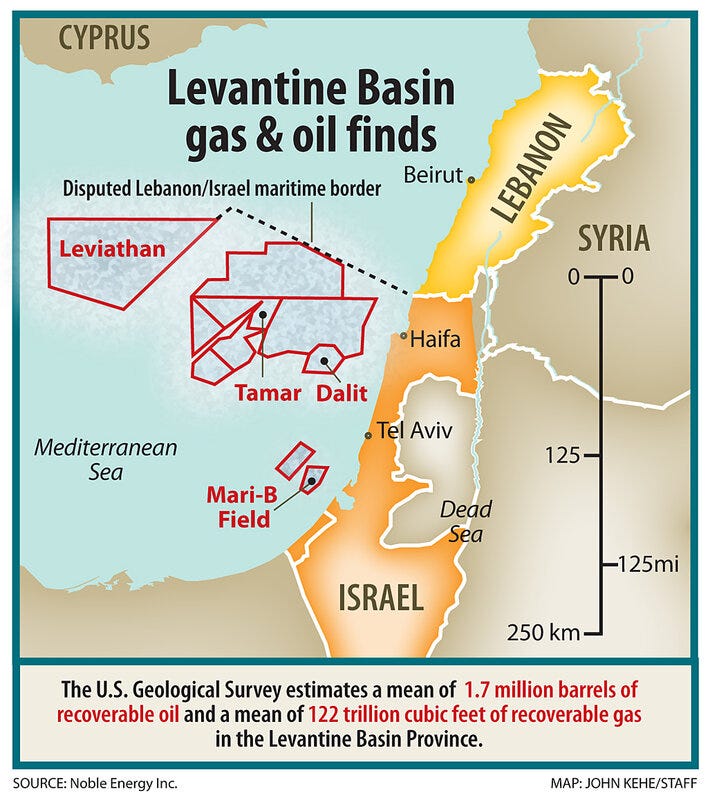
The gas rights were resolved by US-brokered deal in October 2022. The blocking mechanism was removed through the systematic dismantlement of Hezbollah’s military capacity across 2024. The territory is being cleared. The railway corridor is being planned. The reconstruction financing is already approved. And Lebanon, once stabilized under the security architecture being constructed around it, will enter the regional economic integration framework that routes Mediterranean trade through the Abraham Accords network and away from the overland connectivity projects that would have anchored Chinese trade infrastructure in the eastern Mediterranean — which is the strategic outcome the entire sequence was designed to produce.
We Know They Do This

It’s not a secret. The declassified record is not ambiguous. The CIA began arming Afghan mujahideen six months before the Soviet invasion, confirmed by the official responsible, who expressed no regret. Operation Timber Sycamore armed Syrian factions whose weapons reached designated terrorist organizations. A declassified 2012 DIA document described the intentional emergence of a Salafist principality in eastern Syria as something the supporting powers want — not a risk, something they want — a sentence that appeared in a US government document and received one week of coverage before the consensus moved on. Israel facilitated Hamas’s early institutional infrastructure as a counterweight to the PLO, documented in Wall Street Journal and UPI reporting and now sitting in the academic literature without anyone feeling the need to defend it. We know they create enemies to substantiate what they do.
The idea that Lebanon is the single instance in forty years of documented practice where the approach was abandoned in favour of genuine organic conflict requires a faith in institutional restraint that nothing in the institutional record supports.
Metula
On the Israeli side of the border, the northernmost town of Metula tells an uncomfortable story. Roughly 80% of its houses sustained missile and drone damage from Hezbollah positions just metres away across the frontier. As of late May 2026, civilian homes already hit and damaged were allegedly struck again by Hezbollah UAVs and have since been designated for demolition, along with much of the surrounding neighbourhood, in fact Hezbollah has allegedly bombed this evacuated community over 1000 times. Because that makes sense.
If a real unmanaged militia with real hostile intent actually existed on that border, automated systems would have dealt with it. The Iron Beam fires at the speed of light for two dollars a shot. The surveillance drones fly continuously. The seismic sensors cover the ground and the signals intelligence covers the air, and an actual unmanaged armed threat on the frontier of the eighth-largest arms exporter on earth, behind the most layered air defense architecture in history, would survive approximately as long as it takes the targeting algorithm to finish its calculation.
This is also how you identify the controlled commentariat. No one has done more to advance Israeli strategic objectives than the pro-resistance pundits who spent two years amplifying “Hezbollah” and “Hamas” tactical victories while never once asking where the strikes were landing or who had pre-signed the reconstruction contracts or what that enthusiasm manufactured consent for. Judge by what they never ask. The silence is the tell.
What exists instead is a managed condition being wound down on a timeline that serves a normalization process, clearing the territory that process requires, generating the reconstruction opportunity that was pre-positioned before the clearing began, and being covered by a media consensus that has not asked a single structural question about any of it.
The surveillance system is not failing.
The surveillance system is the point, and they’re all in on it.
Wow. What can be said of this is true? All of this being done while at the same time destroying the western economies. Oh boy!
... thanks for ur time and effort on this one Morgan!...much appreciated though i'll have to read through it again and process it...some of ur observations and conclusions seem self-explanatory, but this is a subjective deception of sorts and is only on account of ur exacting elaboration and analysis... 🙏➕🙏...