
Full Steam Ahead:
The US’s Hegemonic Strategy For Gaza


First published on X, April 7, 2024
Just when it seems that Israel's conduct could not possibly become more controversial, they manage to surpass their own precedent, only to apparently be met with incentives more than anything from the United States. This dynamic leaves many questioning the rationale behind the US's financial support for Israel.

The core of the United States-Israel relationship is a strategic alliance, not anchored in shared democratic principles or a pledge to ensure Israel's security. Rather, it is their aligned geopolitical interests that unite them, with this partnership greatly advancing the United States' quest for preserving global hegemony.
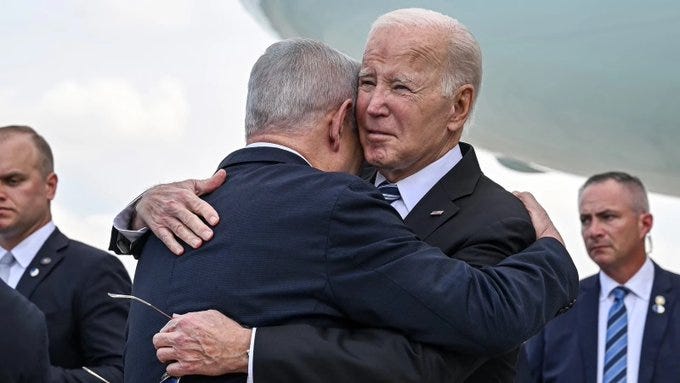
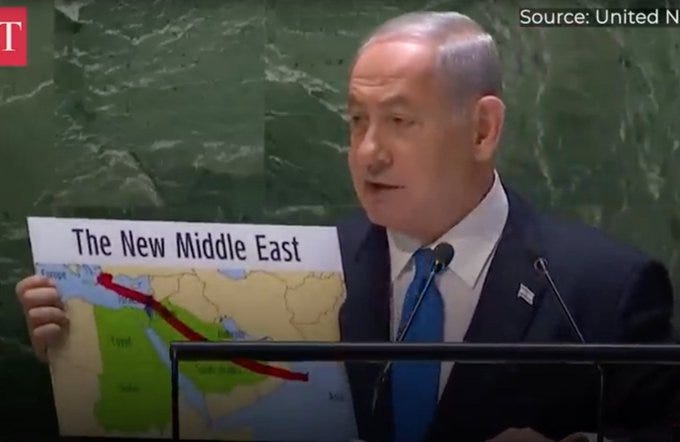
The United States has not only provided financial aid but also engaged in joint training operations with Israel specifically tailored for scenarios in Gaza. This longstanding partnership has enabled the U.S. to extend its military influence in the region, with Israel serving as a proxy that supports American interests and military operations. In this context, Gaza is will be utilized as a tool to advance the US agenda of countering China's rise, by constructing a trade route out of Gaza and a railway line running through Palestine.
The Humanitarian REALITY
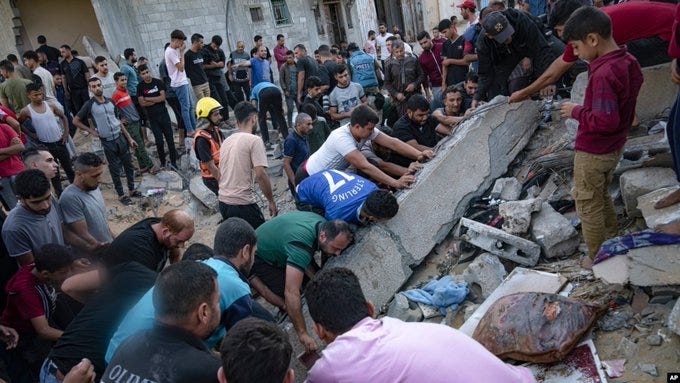
First and foremost, the humanitarian crisis in Gaza has reached catastrophic levels. According to UN human rights experts, Gazans now constitute 80% of all people facing famine or catastrophic hunger worldwide. The situation is so dire that every person in Gaza is experiencing hunger, with a quarter of the population starving and struggling to find food and drinkable water.
The continuous Israeli bombardment has led to a "total siege" on Gaza since October 9, depriving 2.3 million Palestinians of water, food, fuel, medicine, and medical supplies. This has been exacerbated by a 17-year Israeli blockade that had already made approximately half of Gaza's population food insecure and more than 80% reliant on humanitarian aid. The majority of aid distribution is focused on the southern governorates, but since January 1, only 21% of planned deliveries of aid containing food and other life-saving supplies have reached their destination north of Wadi Gaza (OHCHR).

The healthcare system in Gaza has collapsed due to the widespread destruction of hospitals, significantly heightening the spread of communicable diseases. The UN Office for the Coordination of Humanitarian Affairs estimates that nearly 85% of Gaza's population, representing 1.9 million people, is internally displaced, including many who have been displaced multiple times (OHCHR).
Overall, the humanitarian response in Gaza today is described as "an illusion," with efforts to provide aid being haphazard, opportunistic, and entirely inadequate. The distinction between civilians and combatants is disregarded, making it difficult to deliver life-saving aid.

Exploiting Real Suffering
It‘s bad.
It really, really bad. There’s no denying this. For six weeks, the public has been inundated with portrayals of failed attempts to access humanitarian aid, convincing Western nations that there are no other options.

They manipulate the situation to reinforce the narrative that the barriers to aid access are the primary issue, absolving themselves of any responsibility. They even resort to using AI to depict starving children, as if the actual situation wasn't dire enough, thereby exaggerating the severity to further their agenda.
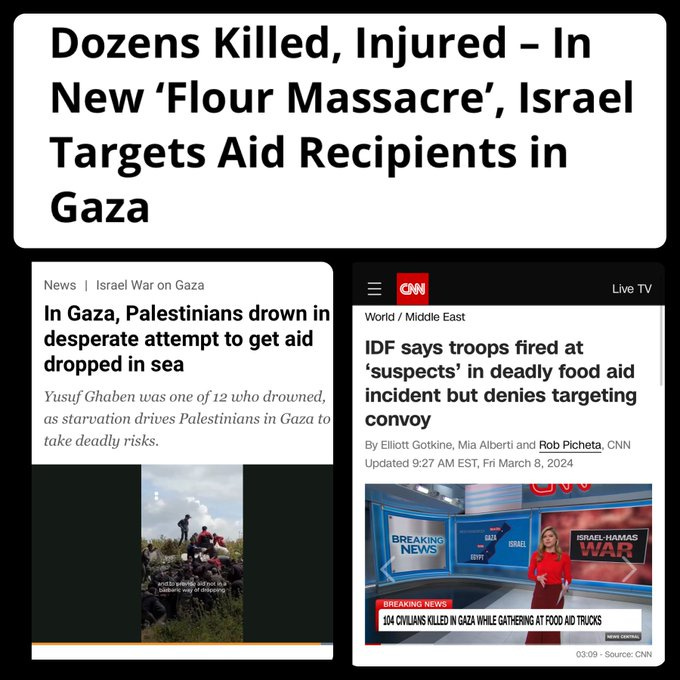
We're aware of the West's indifference towards Palestinians, evidenced by their involvement in air campaigns targeting Palestinians for the past six months and the withdrawal of financial support from organizations aiding them. They exploit a genuine humanitarian crisis to further their own goals, emphasizing tragic events like attacks on aid workers, civilians, or infrastructure, which spotlight the serious security issues in the region.

By manufacturing consent for a permanent presence in the region and presenting the narrative that US involvement is the only viable solution, the US and its allies portray their actions as humanitarian efforts. This strategy allows them to gain a foothold under the guise of benevolence.

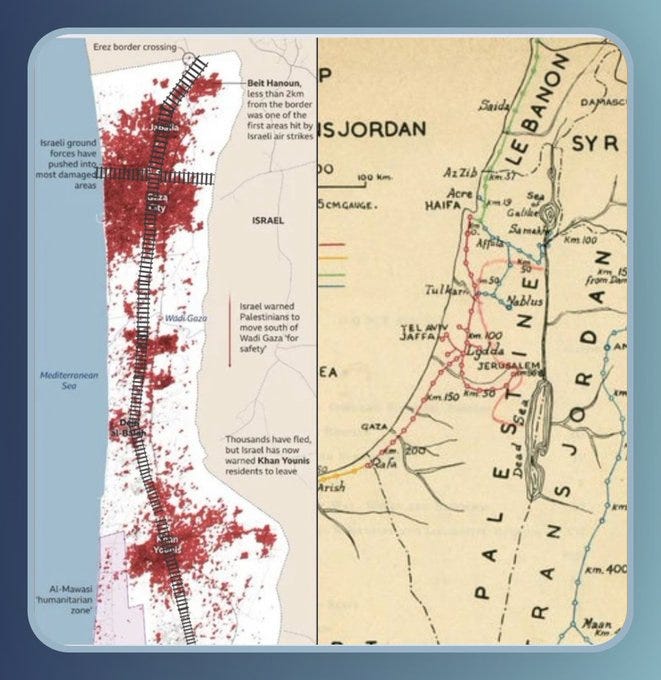
The areas within Palestine that have been most severely impacted reveal a covert strategy by the United States, which involves clearing space for new infrastructure projects. This strategy appears to be intricately aligned with the historical routes of the Palestine Railways, suggesting plans for a rail and port project that are not primarily intended to benefit the Palestinian population.
Khan Yunis: A potential logistics hub, facilitating trade flow.
Deir al-Balah: A strategic central point in Gaza for connectivity.
Gaza City: Anticipated development to support infrastructure.
Beit Hanoun: A potential northern gateway for trade between Europe and Asia.
Rafah: A crucial logistical and transit point
The correlation between the aftermath of these clearances and the original routes of the Palestine Railways indicates a deliberate effort by the United States to utilize historical infrastructure pathways for its own geopolitical and economic interests.

The intention behind this alignment seems to be more than mere coincidence; rather, it points to a covert campaign aimed at reshaping the region's geopolitical landscape to suit the interests of the United States, rather than those of the Palestinian people.
History
Geographical Position and Historical Significance of Gaza:
Gaza's strategic location has historically made it a significant player in global trade. Situated at the crossroads of Africa and Asia, it has served as a vital link for trade routes connecting the East and the West. The ancient city of Gaza was a key stop on the Incense Route, through which valuable spices, silks, and other goods were transported from the East to the Mediterranean and beyond. Its proximity to the Sinai Peninsula and the Negev Desert also positioned it as a crucial junction for caravans and traders traveling between Egypt, the Levant, and the Arabian Peninsula.

The history of the Palestine railway dates back to the late 19th and early 20th centuries. The first major railway line, the Jaffa-Jerusalem railway, was completed in 1892 during the Ottoman Empire's rule. This line connected the port city of Jaffa with Jerusalem, facilitating the transportation of goods and passengers, including pilgrims visiting the holy city.
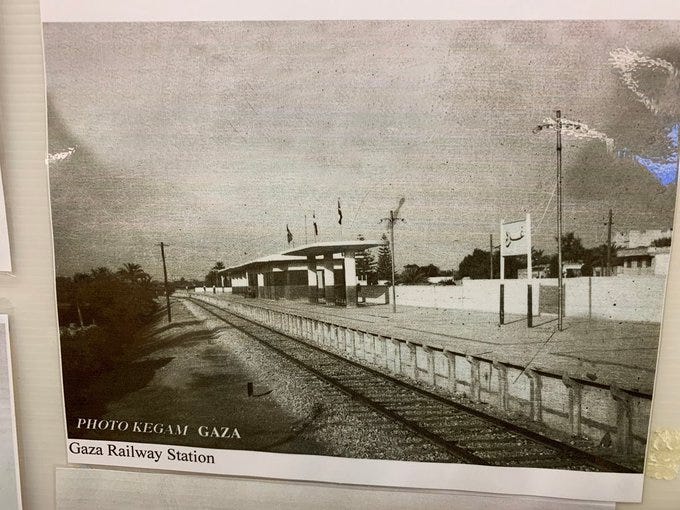
In the following years, additional lines were constructed, including the Hejaz Railway, which aimed to connect Damascus in Syria with the holy city of Medina in Saudi Arabia. A branch of this railway extended to Haifa, providing a link between the port city and the interior regions.During the British Mandate period (1917-1948), the railway network was further expanded and modernized to support military and economic needs.

The network played a crucial role in the transportation of troops, supplies, and goods during World War I and II. However, the 1948 Arab-Israeli War and subsequent conflicts led to the disruption and abandonment of many railway lines. Since then, efforts to revive and modernize the railway infrastructure have been made, but progress has been slow due to Palestinians living under apartheid conditions.

Implementation
The United States' involvement in Gaza, especially through major infrastructure projects such as rail and port developments, will significantly reshape the geopolitical landscape. This strategic presence could challenge the interests of global powers like Russia and China, potentially obstructing their future trade initiatives and disrupting their current trade networks in the region.
Global Trade Dynamics and the Multi-Polar World:
In a multi-polar world, where power is distributed among various global actors, the significance of trade dynamics cannot be overstated. The Belt and Road Initiative (BRI) by China and the India-Middle East-Europe Economic Corridor (IMEEC) are examples of large-scale infrastructure projects aimed at enhancing connectivity and trade across continents. These initiatives are not just economic undertakings; they are also tools of geopolitical influence, creating dependencies and reshaping international alliances
Impact on Russia
The development of new transport infrastructure in Gaza, particularly a rail and port project, could have a significant impact on Russia's strategic interests, particularly in the context of its collaboration with Iran on the North-South transport corridor. If Gaza becomes a key junction in the global trade network, it could offer a competitive alternative to the North-South route, potentially diverting trade flows and diminishing the corridor's economic viability. This shift could undermine Russia's efforts to strengthen its geopolitical influence and economic presence in the region, as the new infrastructure in Gaza might provide more direct and efficient access to markets, challenging the strategic importance of the route through Iran, the Caspian Sea, and Russia.
Energy Exports: A significant portion of Russia’s economy is dependent on energy exports, including to Europe via the Middle East. Enhanced U.S. influence in Gaza could facilitate alternative energy routes or sources, potentially disrupting Russia’s energy dominance and affecting its market share and pricing leverage.
Military Presence: An increased U.S. presence could necessitate heightened Russian military readiness in the region. This might divert resources from other strategic areas or necessitate increased Russian military presence, leading to escalated tensions and a possible arms race, which Moscow might find economically taxing.
Impact on China
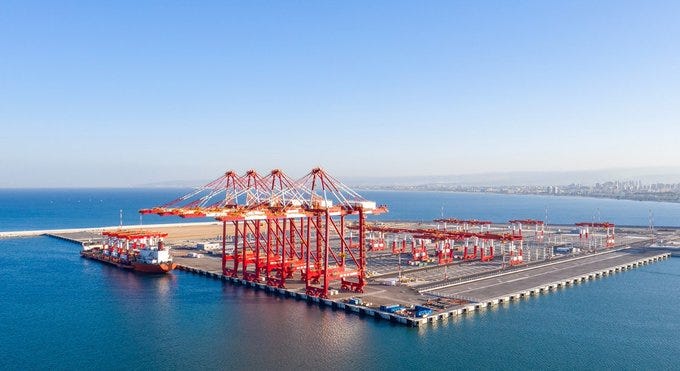
China's engagement in Haifa, a significant maritime port in Israel, highlights its strategic ambition to establish a presence in the Eastern Mediterranean. The U.S. rail projects in Gaza represent not only a counteraction but also an effort to undermine Chinese influence in Israel and the wider region.

The Belt and Road Initiative (BRI) Disruption: China’s BRI seeks to create a vast network of trade routes and infrastructure projects linking Asia with Africa and Europe. U.S. projects in Gaza, especially if designed to enhance regional connectivity, could offer alternatives to BRI routes, thereby diluting China’s influence and economic penetration in the Middle East.
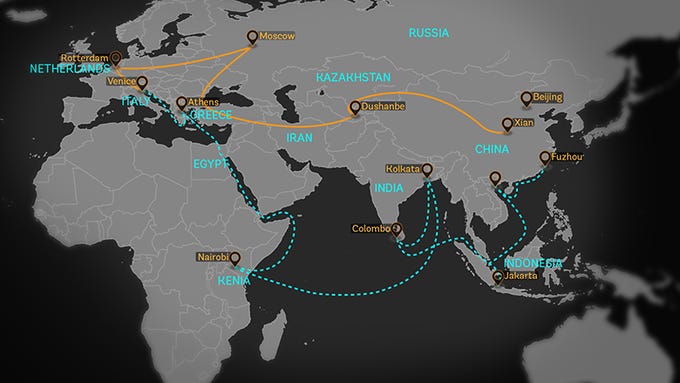
Trade and Investment: The U.S. establishing a stronger foothold in Gaza will also mean increased U.S. influence over local economies, potentially at the expense of Chinese investments and projects. Countries in the region might pivot towards the U.S. for economic and military support, hindering China’s efforts to expand its trade relationships.
India-Middle East-Europe Economic Corridor (IMEEC):
The India-Middle East-Europe Economic Corridor (IMEEC) aims to enhance connectivity and economic integration between India, the Middle East, and Europe through improved transportation networks, including railways and maritime routes. Its objectives include strengthening trade links, enhancing connectivity, promoting regional integration, diversifying energy sources, and supporting economic development. Gaza's strategic location could make it a key maritime link in the IMEEC, with the development of its port infrastructure potentially serving as a an important node for goods traveling between these regions.
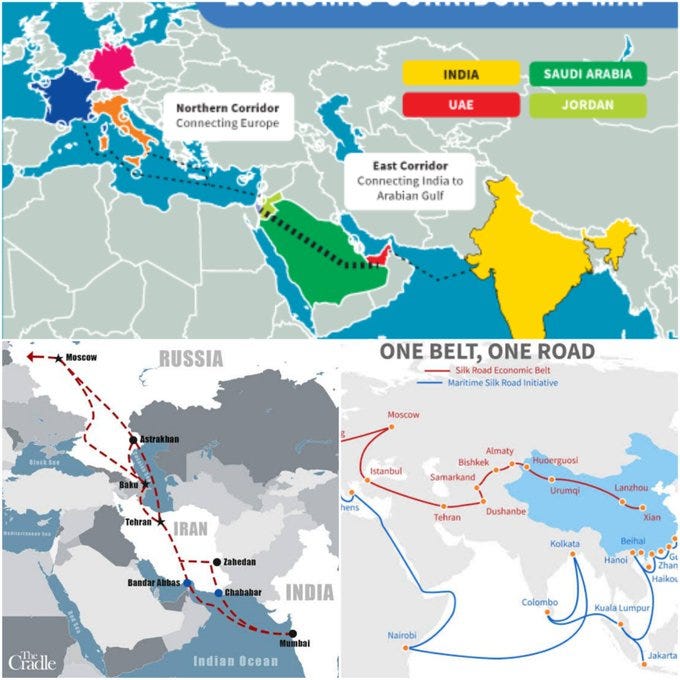
The Route
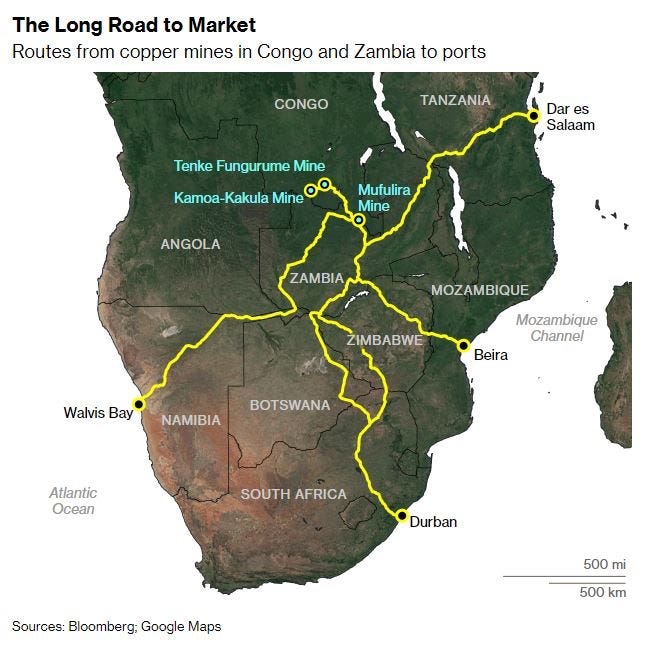
The joint statement from the United States and the European Union supports the development of the Lobito Corridor by Angola, Zambia, and the Democratic Republic of the Congo. This initiative aims to connect the southern Democratic Republic of the Congo and northwestern Zambia to regional and global trade markets via the Port of Lobito in Angola. The partnership will focus on upgrading critical infrastructure, accelerating digital access, and enhancing agricultural value chains to increase regional competitiveness.

From the Port of Lobito, goods could be transported across the Mediterranean Sea to the newly developed port in Gaza, creating a seamless trade route that connects Africa to the Middle East. This linkage would not only facilitate the flow of goods between the two regions but also enhance economic integration and cooperation.

The development of the port in Gaza as part of this trade corridor could serve as a strategic entry point for African exports into the Middle East and beyond, furthering the goals of regional development and global trade connectivity.
Egypt
As Egypt undertakes the modernization and expansion of its rail network to bolster its transportation infrastructure, it is poised to play a pivotal role in facilitating the integrated trade corridor, including a potential railway through Gaza.

This development is particularly significant as it aligns with broader regional initiatives, such as the India-Middle East-Europe Economic Corridor (IMEEC), which seeks to enhance connectivity and economic integration across continents. The involvement of Egypt in these infrastructure projects, especially in the context of a railway through Gaza, could also explain its recent military engagement in the region. By securing and stabilizing the area, Egypt aims to ensure the smooth implementation and operation of these critical trade routes.
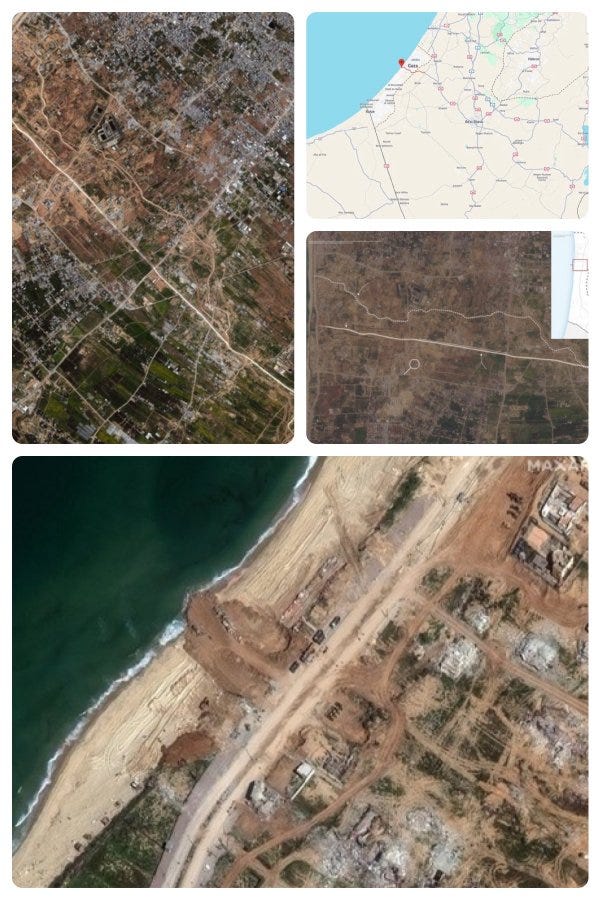
The Netzarim Corridor
This The Netzarim Corridor is a narrow strip of land in the Gaza Strip that connects the territory to the rest of the Palestinian territories. Historically, it has been a subject of controversy due to its strategic implications and the impact on the division of the Gaza Strip into northern and southern zones.
The corridor could serve as a critical logistical route and be additionally utilized for:
Strategic Mobility: Facilitating the movement of goods and military equipment.
Economic Gain: Enhancing trade routes for the countries involved.
Resource Access: Providing a direct route for the transport of resources from the region to Western markets.
Geopolitical Influence: Strengthening the geopolitical presence in the region.
Erez Crossing
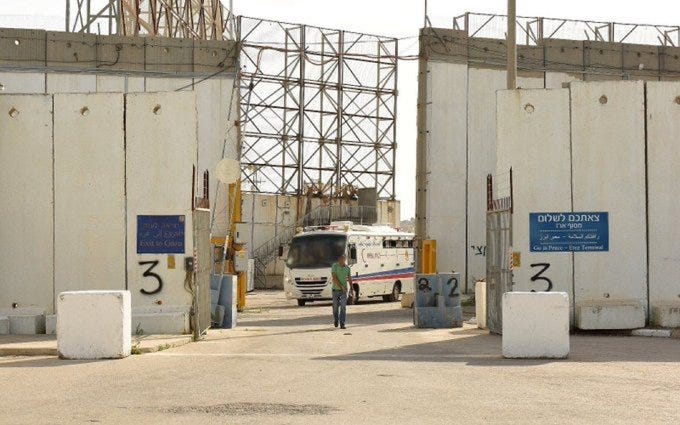
The recent announcement of the Erez border crossing opening further illustrates how the US exploits a humanitarian crisis as a route to further its geopolitical objectives. It initially creates a dire situation where the US facilitates access to aid, emerging as heroes despite their accountability for the conditions in Gaza. This also aligns with the objective of constructing a rail line through Palestine. Given that the crossing is the location where the situation previously operated.
As the situation unfolds, it becomes increasingly clear that the underlying motives extend beyond immediate humanitarian concerns. The US and its allies strategically position themselves to advance their interests in trade and geopolitical influence through the orchestration of a crisis and the subsequent proposal of a Western presence under the guise of security. The development of infrastructure such as railways and ports, while seemingly beneficial, aligns closely with the objectives of the IMEEC, serving to counteract the expanding reach of China and other “rivals.” We can anticipate a ceasefire and a renewed expression of goodwill towards Palestinians, which is significantly overdue, underscoring the Western objective.

(Remember- the first thing they bombed was the port)